Europe is facing a whole range of challenges in 2026. Three in particular stand out: competitiveness, climate, and housing.
Competitiveness has been near the top of the EU’s agenda since September 2024, when Mario Draghi released his eponymous report. The EU is committed to simplifying its policies and laws to boost competitiveness, and it’s one of the top two goals that the Commission, Parliament and Council mention in their plan for 2026, along with security.
Climate and energy are two intertwined issues. As Draghi pointed out, we need a decarbonisation plan that supports growth. One of his findings was that slow permitting undermines grid investment. Across Europe, there is five times more wind energy stuck in permitting than deployed on the grid.
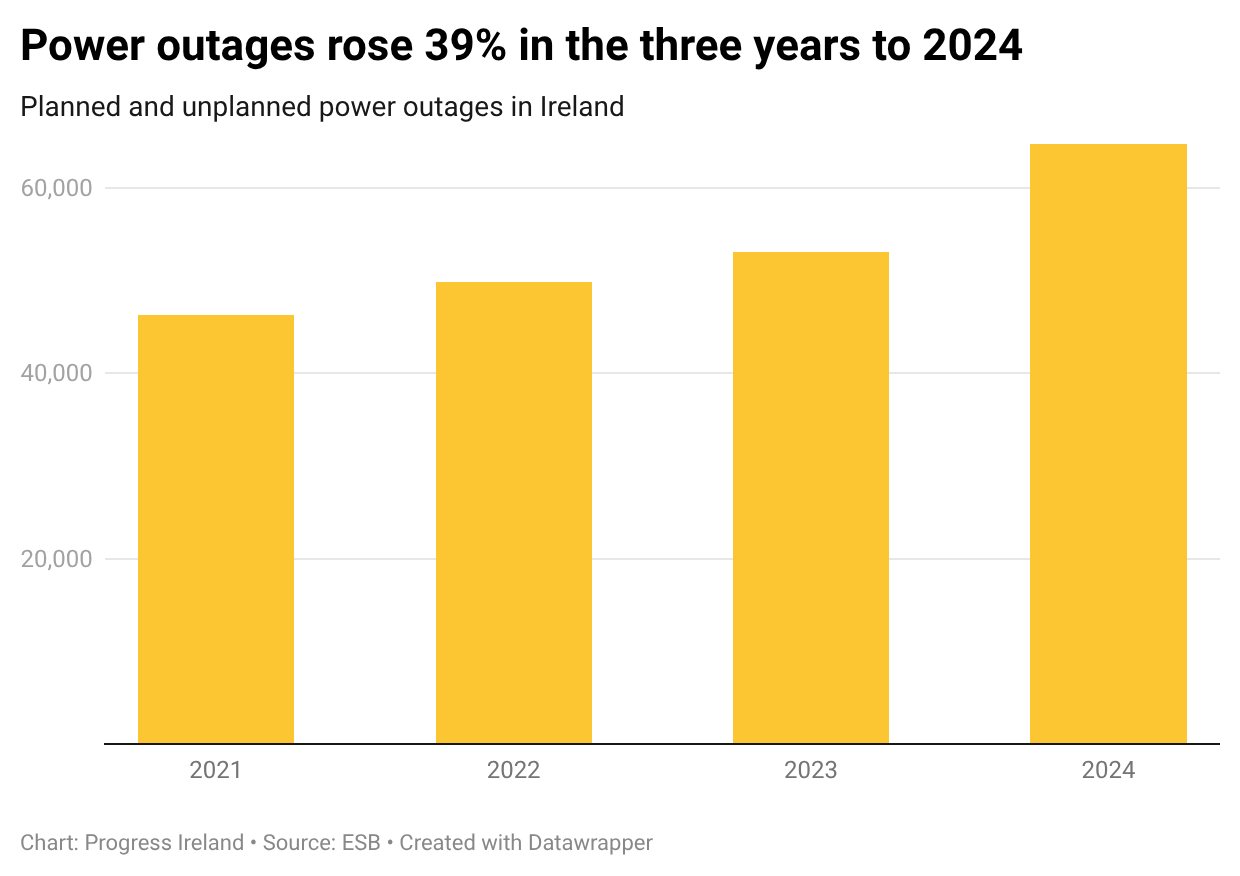
This helps explain why industrial electricity prices in Europe are more than double those in the US (prices in Ireland are among the highest). More than one in ten Europeans cannot afford to heat their homes. A year on, Draghi says there are still no proposals to properly fix this. We need to triple our installed capacity for solar PV and more than double for wind to meet climate targets.
Lastly, housing has become a newly important area for the EU. As Ursula Von der Leyen pointed out in her state of the EU speech, house prices are up by more than 20% since 2015, and building permits are down by over 20% in five years. In 2023, almost one in ten Europeans spent 40% or more of their household disposable income on housing. The EU has set up a Housing Committee to tackle this problem.
These issues seem unrelated, but there’s an underlying theme tying them together: the built environment. In other words, it’s the physical infrastructure that we all need to work, live, and travel.
The built environment is crucial for competitiveness because the economy is still, in large part, made up of physical things – including people. Businesses manufacture goods, which are shipped or driven to consumers. Those consumers need housing near their jobs, which increasingly means building in and near our most productive cities. Large, populous urban areas lead to agglomeration effects and more economic growth. These cities are only possible with the transport and energy infrastructure to support households and businesses. These overlapping challenges can be thought of as a single built environment problem.
The built environment programme for 2026
The built environment isn’t always thought of as an EU competency, as national capitals have a significant control over it, especially through planning policy. But the built environment is really more like a shared competency, as many existing EU policies affect it. More are coming down the track in 2026.
First, the environmental omnibus.1 Recently published, it focuses on industrial emissions, circularity and environmental assessments. Reforming the latter could speed up permitting, which is necessary for both competitiveness and new energy projects. The Commission has also promised to stress-test the Birds and Habitats Directive, which Progress Ireland has called for in recent months. Speeding up permitting, and easing unwieldy environmental legislation, would help Europe to build infrastructure, housing, and factories in a more timely and affordable fashion.
The Construction Services Act, due to be presented to lawmakers in late 2026, could be similarly important. As the EU has noted, regulation of construction services in different jurisdictions holds back the supply of housing and infrastructure. For example, qualifications recognised in one country are often not recognised in others, affecting the likes of health and safety, energy efficiency, and environment. Harmonisation would lead to more cross-border service provision.
The impact would be dramatic: A 10% reduction of barriers in construction services would increase EU gross value added by 0.5%, and a 25% reduction would have an even greater impact, a 2.3% increase in gross value added. A true Single Market in construction is yet to be realised.
The EU also recently published its Grids package, part of a long running goal to make European grids more digitalised, decentralised, and flexible. The grid is ageing, with half a trillion euros of investment required to make the necessary upgrades. Grid congestion already costs €5 billion a year, a figure that could increase fivefold in the next five years. However, if upgrades take place, the Commission estimates that increasing cross-border electricity trade by 50% could raise annual EU GDP in 2030 by around €18 billion. The proposed legislation makes it easier to build this infrastructure and coordinate between countries to do so.
This year will also see negotiations and agreement on the EU’s next Multiannual Financial Framework (MFF), for 2028-2034. Ireland will have a key role in chairing these conversations as it holds the EU Presidency in the second half of the year. One specific aspect of this is the Connecting Europe Facility, which will devote tens of billions of spending to transport and energy infrastructure.
Housing
Lastly, as mentioned above, the EU is giving serious attention to the continent-wide housing crisis. The EU recently published its Affordable Housing Plan, and a housing simplification programme will follow in 2027. It’s worth examining this in more detail.
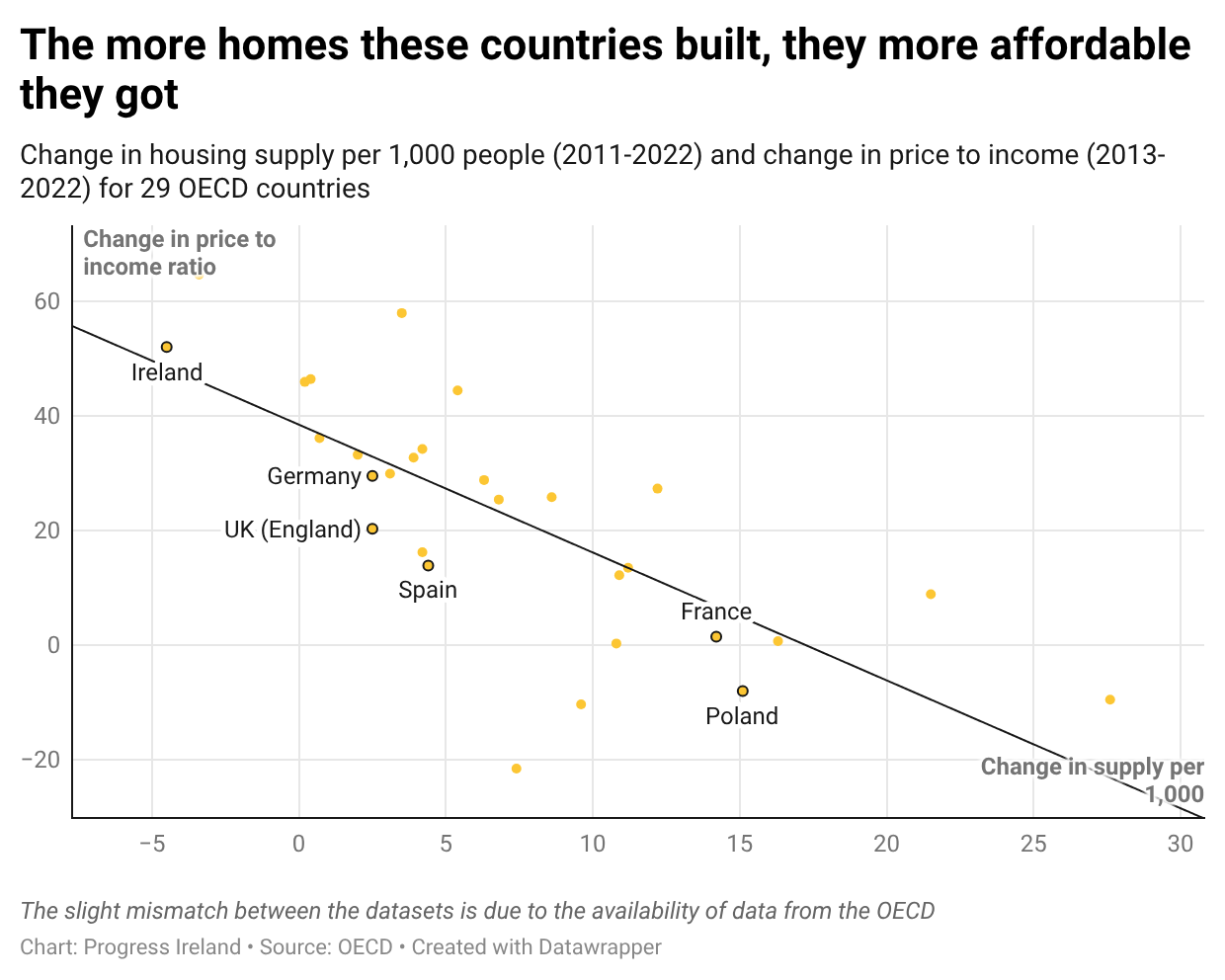
Housing is one of the most important challenges for Europe to tackle. More homes in Europe’s most economically successful cities is essential to competitiveness, from Dublin to Berlin, Madrid to Stockholm. The plan’s first pillar, boosting housing supply, is particularly aligned with an overall built environment agenda.
However, there are other questions to be asked about the plan in its current form. Housing is a problem continent-wide, but is it the EU’s problem? The plan itself notes that “most rules that influence housing supply are set by Member States, including at regional and local levels”. Certainly, there is EU red tape that restricts housing supply, such as badly-designed environmental rules. Positively, there are also opportunities for the EU to harmonise regulation, like in the forthcoming Construction Services Act.
But should the EU itself be investing €10 billion in new housing? Does it have a clear picture on what the actual barriers are to housing construction in each EU country?
There are other concerns. The plan talks up combining “affordability, sustainability and quality” in housing. These are noble goals. However, there is a relationship between these aspects of housing: having higher standards for our homes will mean that they’re more expensive. The word “trade off” does not appear in the housing plan.
Europe should pay attention to housing supply lessons from the United States. Houston, Texas, for example, has increased housing supply by introducing city-wide upzoning – with a crucial opt-out for neighbourhoods which don’t want to participate. This has made the reforms politically durable, and the city enjoys relatively affordable house prices as a result.
In addition, legal barriers to housing development means that spending on affordable housing can be quite inefficient. If we’re going to spend billions on new housing, we should make sure that we can deliver as many units as reasonably possible. Excessive legal barriers means that some of that money is spent on, say, planning consultants, rather than new apartments.
University of California academic Chris Elmensdorf has proposed a mechanism that addresses this problem. In the mechanism he’s designed, eligibility for federal affordable housing subsidies is dependent on a qualifying city opting into a pro-supply housing framework. In other words, cities that want to seriously solve the problem of housing affordability – via supply increases – get rewarded accordingly.
The specifics may well vary in Europe, but the EU would do well to learn from opt-outs and conditional affordable housing subsidies. Housing reforms need to be politically durable, and focused on increasing supply.
Build baby build
The EU has a huge opportunity to reshape the European built environment in 2026, and one that it can ill afford to let slip. The following principles can focus European minds.
First, speed really does matter. Slower permitting means that projects become less profitable, with capital tied up for longer and workers sitting idle. Allowing companies, governments, and individuals to move faster means that more of them will be able to afford the next round of investments in our physical infrastructure, from roads to homes.
Second, physical infrastructure is a fundamental input to economic growth. Modern economies are increasingly dependent on large cities to drive growth, and it’s also these cities that are most effective in lifting people out of poverty. Allowing cities to grow is essential for Europe’s economic performance.
Third, physical infrastructure is necessary for clean, abundant energy. Whether it’s renewables like wind and solar, or other clean sources like nuclear, we won’t have energy abundance and industrial competitiveness without a programme of significant construction of more energy generators.
The Abundance Agenda in the United States shows the way. Ezra Klein and Derek Thompson’s best-selling book showed that supply side constraints were in the way of progressive goals like affordable housing, clean energy, and even healthcare. When it comes to the built environment, the EU should be similarly unafraid to eschew a degrowth mindset.

Note that this is distinct from an earlier simplification omnibus, which focused on simplified sustainability reporting and due diligence rules for businesses.