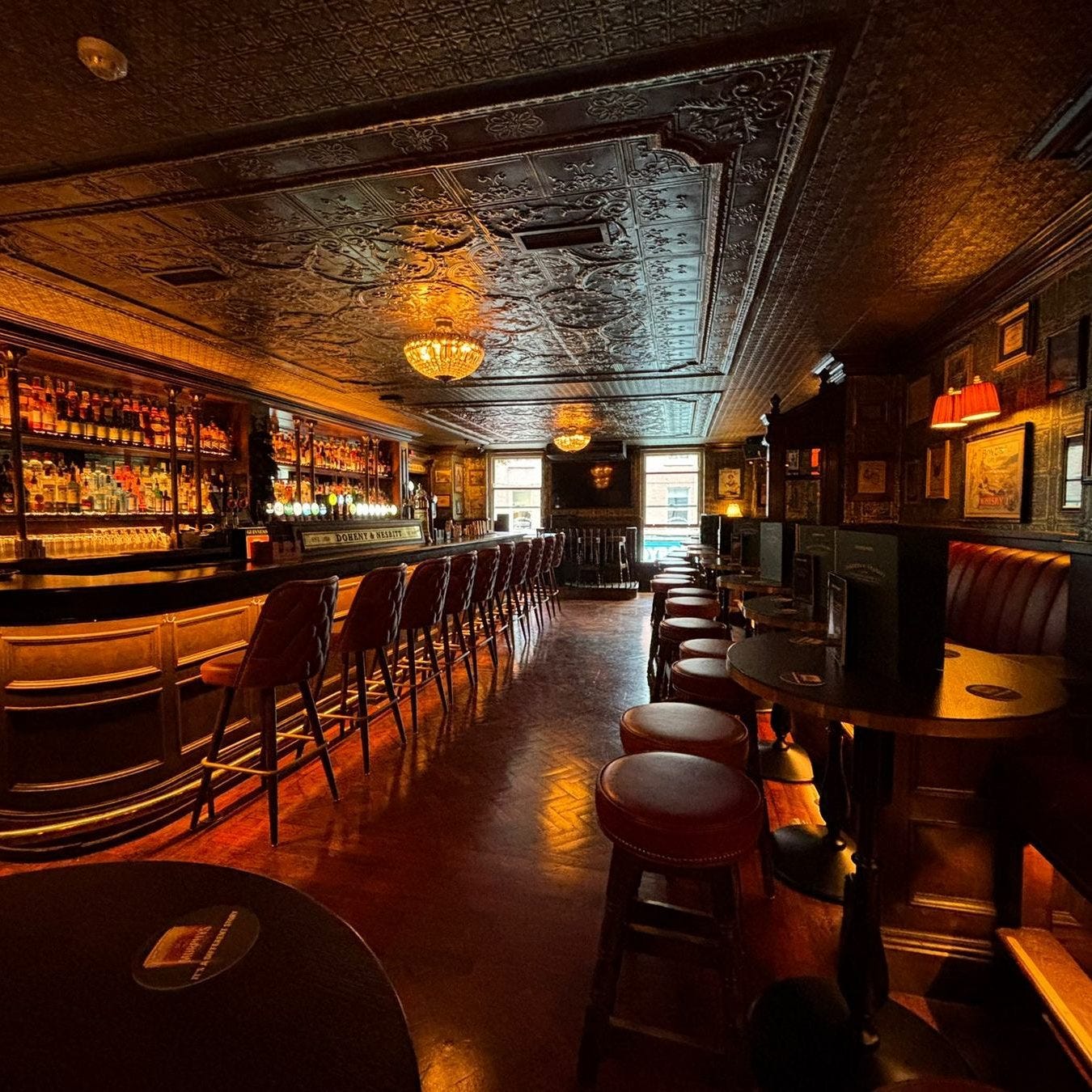
First up: Progress Ireland’s monthly happy hour takes place tonight, the last Wednesday of the month. It’s happening from 5:30 to 7:30 at The Duke, Duke Street, Dublin.
The government should allow seomraí to be rented privately to non-family members. This point is currently under consideration. Banning seomraí to those seeking to rent a home cuts their benefits off from the group most acutely in need of housing.
People base their general election vote, not on what the headlines tell them, but on whether their lives feel like they’re going well. Governing parties got a polling bump only when the 2022 winter fuel credit hit peoples’ bank accounts – four weeks after they were announced and discussed in the media.
Banning renters from seomraí misses an opportunity to cultivate new voters. Every seomra rented out creates a grateful renter and a grateful homeowner. For these voters, seomraí are not just another issue among many. For them, seomraí are highly salient.
Seomraí won’t appear all at once. Based on the experience of housing-constrained US, Swedish and Canadian cities that lifted bans on accessory dwelling units, and scaled to population, it’s reasonable to expect 3,500-7,000 seomraí to be built per year. That would be an increase in the housing stock of 0.15-0.34 per cent per year. It would be one new unit per 400 existing houses, per year.
Every seomra creates approximately three big beneficiaries: two homeowners and one tenant. That’s 10,500-21,000 additional beneficiaries per year. This sums to 42,000-104,000 big beneficiaries by the next election in 2029.
63,000 votes separated the three largest parties in the 2024 election.
The beneficiaries of seomraí would cut across old and young, rural and urban, high income and low income.
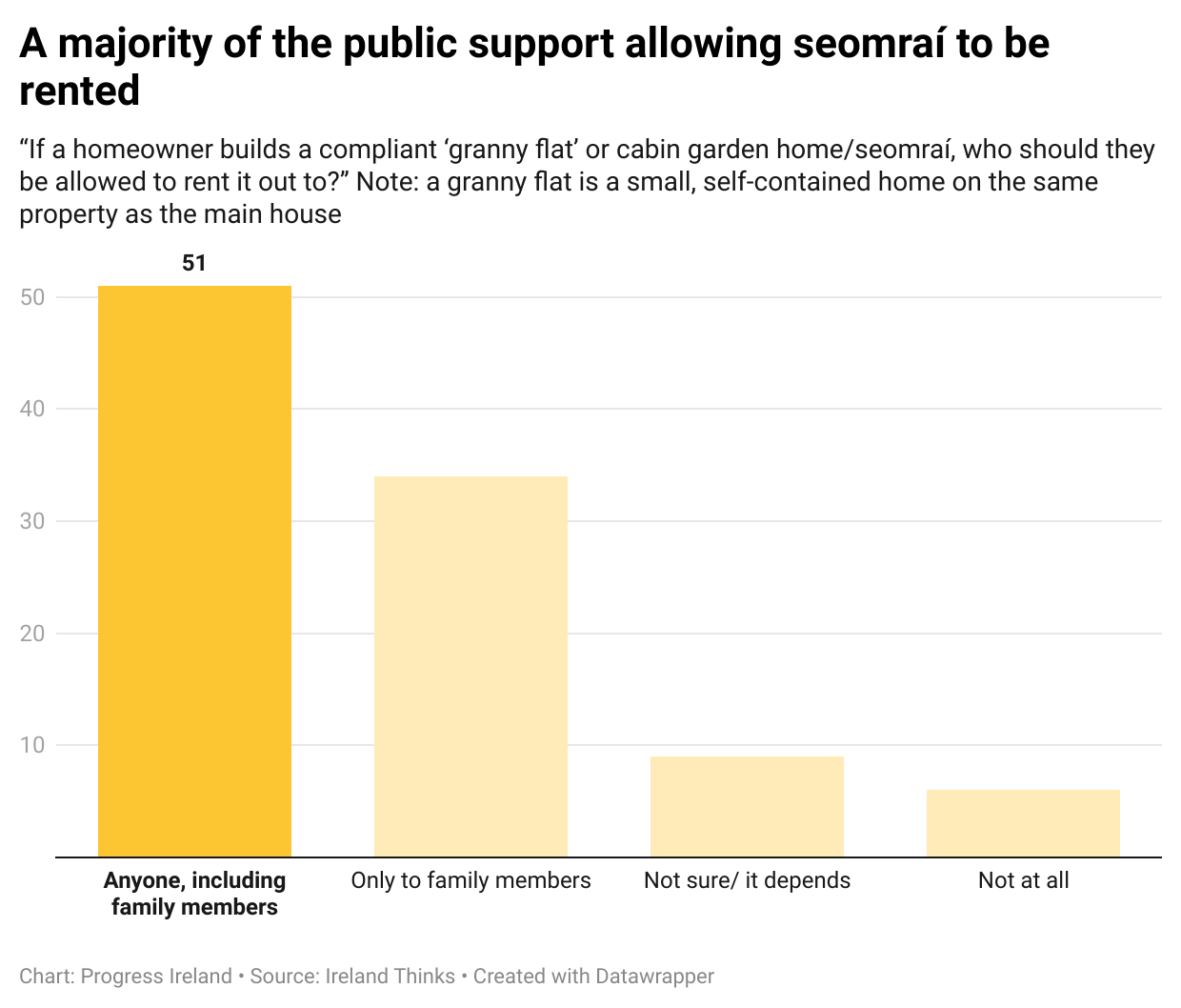
The majority of the public are in favour of seomraí being rented out. Asked in August, “If a homeowner builds a compliant ‘granny flat’ or cabin garden home/seomraí, who should they be allowed to rent it out to?”, 51 per cent said they should be allowed to rent to anyone, compared to 34 per cent that thought the option should be limited to family members.
The voters of The Green Party, Aontú, Fine Gael, Sinn Féin, Independent Ireland, Fianna Fáil and the Social Democrats preferred that seomrai be free to be rented to anyone, rather than that they be restricted to family members. 52 per cent of Sinn Féin voters were in favour of seomraí being rented outside the family, compared to 28 per cent who were against.
Supporters of Independents, Labour and People Before Profit–Solidarity were the most closely divided by the seomra question.
The objections thrown at seomraí are paper-thin. On the Crazy House Prices podcast, the TU Dublin housing lecturer Lorcan Sirr said of them: “You need lots of grass because our drainage system is already suffering, the Victorian drainage system we have. The last thing [Irish Water] want to see is a proliferation of concrete over back gardens, and water running into drains”. To that I would say, what possible solution to the housing shortage does not involve concrete being poured over grass?
Say the takeup of seomraí is very strong – say 7,000 units being built per year – necessitating some remedial water works, after some number of years, in some places. Is that not a good problem to have? Are we trying to solve the housing shortage or minimise the need for capital expenditure on water infrastructure?
The water thing is not trivial, but it is manageable. Based on international comparisons, the upper bound for national takeup of seomraí is about 7,000 homes per year. Let’s imagine for the sake of argument that all of these areas are built in Dublin, where there are 700,000 homes right now. So in this extreme example, we would be looking at a one per cent annual increase in Dublin’s housing stock. Also assume for the sake of argument that seomraí use as much water as a typical house. For the branches of the water system that are already close to capacity, say at 90 per cent capacity, there would be ten years to plan remedial works.
Sirr’s next objection is that rentals won’t be properly regulated: “A lot of them will be turned into illegal rents – that’s the evidence that has been around the world – and the RTB won’t get any extra funding to regulate this.” Again I would say, what possible solution to the housing shortage does not involve more people renting homes? If more people are renting more homes, is that not a good problem to have? If the RTB needs more resources to deal with this, should it not get them? Are we trying to solve the housing shortage or minimise spending on the RTB?
Sirr’s next objection is that suburban densification would necessitate more parked cars: “So now you’re looking out on a street and you have 30 per cent more cars being parked everywhere.” Sirr has, manytimes, extolled the benefit of compact growth. I’m not sure how one can simultaneously be in favour of compact growth and against a 30 per cent increase in the density of Ireland’s low-density suburbs.
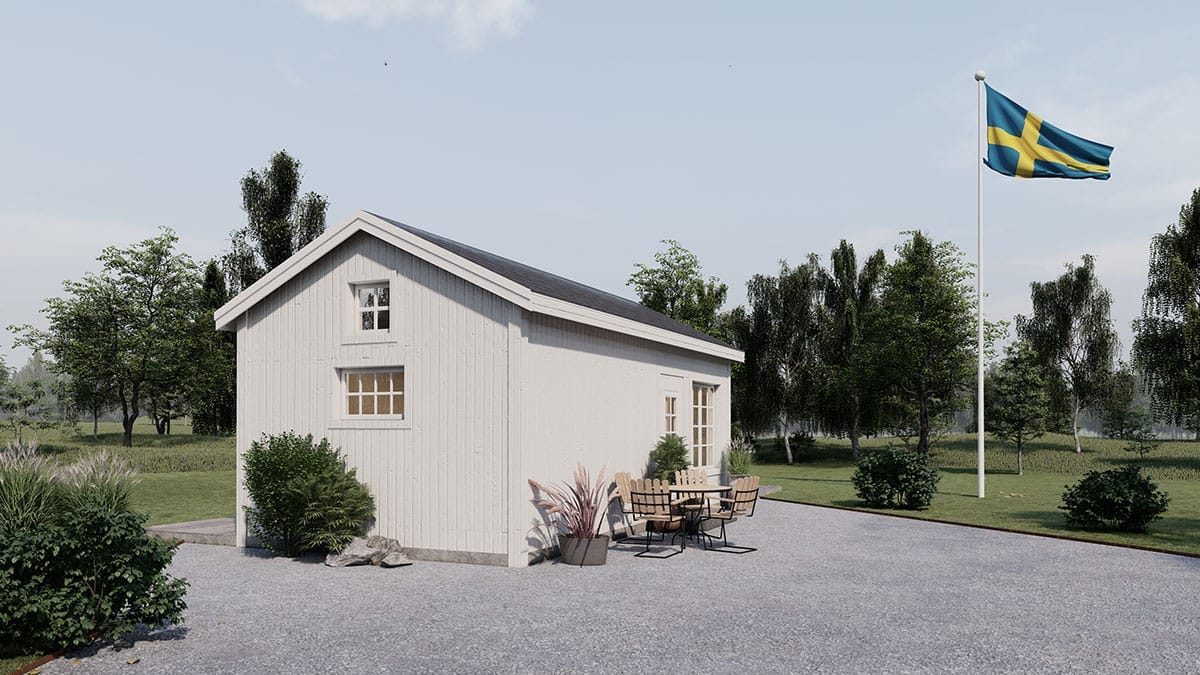
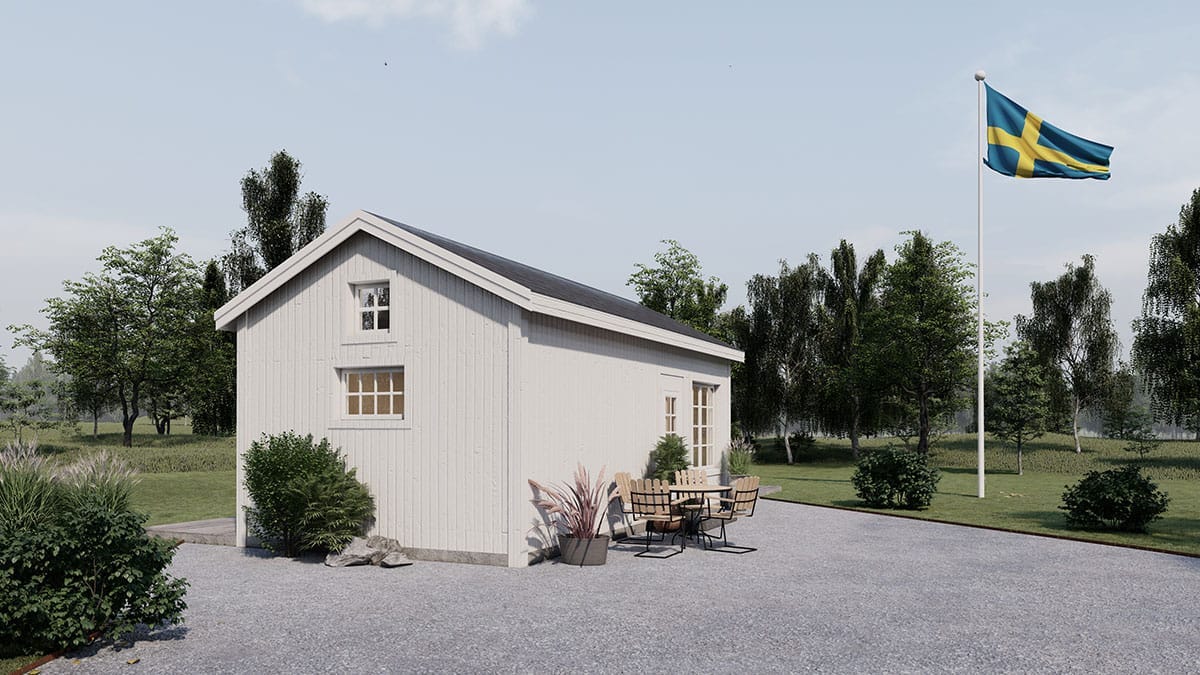
Attefallshus were legalised in Sweden in 2014. Pic: Svenskaskalhus
“The existing planning system may grant permission to seomraí, therefore if seomraí were good they would have been granted permission by the existing system” is not as airtight an argument as it may seem.
It’s hard to conceive of a more environmentally friendly housing policy than seomraí. Seomraí minimise sprawl, provide demand for public transport, and significantly reduce life-cycle carbon emissions relative to cast-in-situ structures.
Those on the lowest incomes are hardest hit by a ban on small homes. It is they who are are outbid for the existing stock of homes. In response they are forced to live with family members, cram with strangers or commute from farther away. Among the demographics Progress Ireland polled in August, the one most in favour of seomraí being rented out to non-family members was the one currently sharing a home with their family – 61 per cent in favour with 28 per cent against.
Ireland’s housing shortage is concentrated specifically in the category of small homes. Yet, high construction costs make small apartments unviable to build.
The beauty of seomraí is that they sidestep one of Ireland’s most challenging housing problems: high construction costs. It costs about €500,000 to build a small A2-rated apartment, but about €100,000 to build an A2-rated seomra of equivalent size.
The other beauty of seomraí is that they sidestep the planning bureaucracy, resulting in faster and less uncertain projects.
Yet another beauty of seomraí is that they situate people as near as possible to existing jobs and public transport infrastructure. It’s easier to piggyback on existing bus and rail routes than to build a new transport network from scratch.
There aren’t many ideas with the potential to deliver the size of unit most needed, in the places most needed, at scale, near to transport infrastructure, compatible with carbon commitments, in a way that benefits homeowners.