We Hebben Een Serieus Probleem
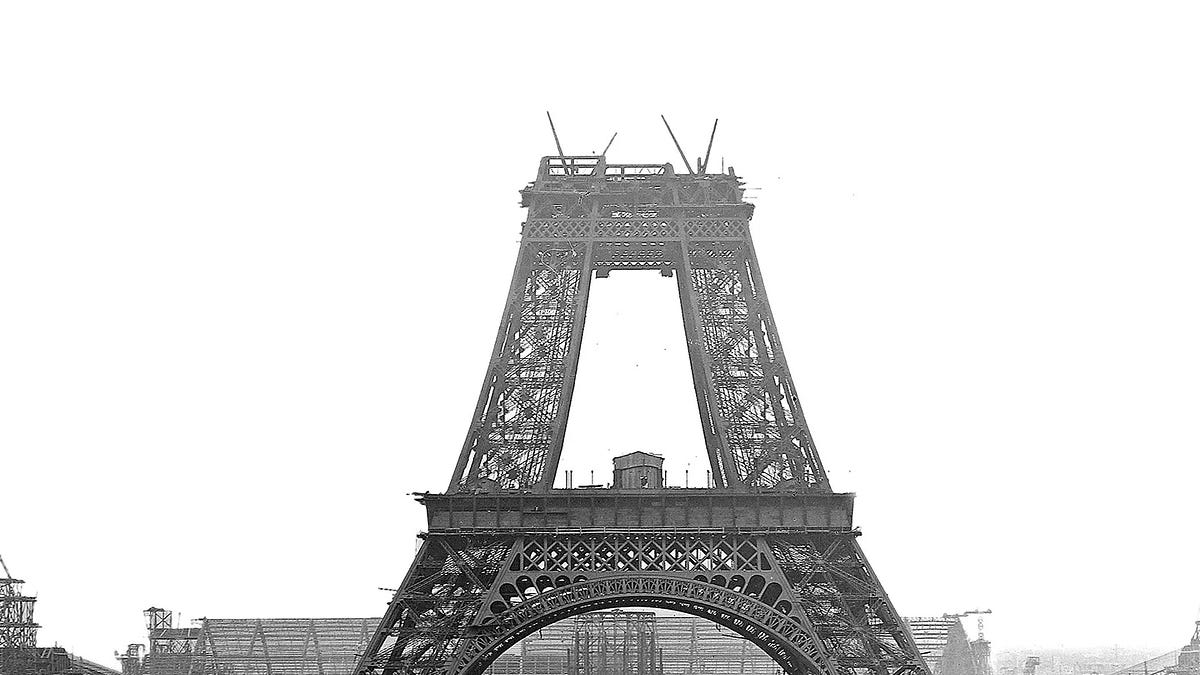
In the spring of 1888, the iron beams of a strange new structure began to project above Parisian rooftops. The following year, barely more than two years after construction began, the Eiffel Tower was completed. This wasn’t even that exceptional. Between 1800 and 1919, Berlin’s population grew tenfold, and Budapest quadrupled its population in the span of forty years. At the end of the century, the Channel Tunnel was built in just six years, despite having the world’s longest underwater tunnel section. In the decades after the Second World War, European cooperation was totally compatible with big construction projects being built at pace.
Europe still plays a role in construction. Sometimes, the European Union still helps us build great things, as when it procured vaccines to fight Covid-19. But its other role today is as a frequent blocker. In the Netherlands, European rules have led to a freeze on new construction permits. Across the continent, important cross-border electricity and gas infrastructure projects take an average of 3.3 years to get permitting approval, and are frequently delayed. Permitting for large renewable projects can take up to nine years in some member states, resulting in the installation of outdated technologies.
The result is that we’re not putting resources into infrastructure. Energy infrastructure investment is “slow and suboptimal”, according to the Draghi report. It also notes that the EU has fallen behind the US when it comes to private productive investment (gross fixed capital formation minus residential investment) since the 2008 financial crisis, and government spending has not closed the gap.
Both the private and public sector are unhappy: a survey by BusinessEurope found that the complexity and duration of permitting are an obstacle to investing in the EU for 83 per cent of companies. The European Investment Bank reports that almost half of EU municipalities say that regulatory processes are a barrier to infrastructure investment.
I want to focus on one aspect of these procedures: clumsy environmental regulation. Well-intentioned but poorly designed environmental procedures are holding us back without benefitting the natural world. They’re blocking new housing, infrastructure, and the investments needed to decarbonize the economy. Let’s examine how this happens.
How environmental regulation can go wrong
The goal of environmental regulation is good: there are species that need to be protected and habitats that should be preserved from development. It’s important that we build in the right places, and not the wrong ones. (European regulations focused on carbon emissions reduction are a different category and are not in the scope of this post.)
At the same time, few would argue that we should never develop. Most of us want to protect the environment and grow our economies at the same time, not least because the extra resources that growth provides can be used to mitigate climate change, fund our security, and address other societal challenges.
Our environmental goals should therefore be implemented carefully. Economic growth is valuable in its own right. It is also necessary to generate the resources and political stability needed to preserve the natural environment in the long run.
The EU uses directives to set out goals that member states must achieve. Directives are proposed by the Commission and passed by both the Council of the EU and the European Parliament. It’s then left to member states to ‘transpose’ these directives into national legislation, where they then affect policy. So while it’s the responsibility of member states to do this accurately and sensibly, the bodies that make up the EU are the ones who have responsibility for the directive itself.
Depending on how widely you cast the net, there are dozens of EU directives that relate to the environment. In this post, I will focus on the following three, because they are the most relevant to economic growth, infrastructure delivery, and climate goals.
The Habitats Directive is designed to protect biodiversity by listing over a thousand species as protected, along with 230 habitat types. The Environmental Impact Assessment (EIA) Directive mandates environmental surveys for proposed building or development projects. The Aarhus Convention is focused on “environmental democracy”. It guarantees public rights in three areas: access to environmental information, public participation, and access to justice.
Each of these directives is motivated by a laudable goal. But in their current form, these directives are unintentionally hurting what they were meant to protect, undermining our environment, climate, and economy.
Habitats Directive
Consider a new housing development at the edge of a city. This development might adversely affect a species protected by the Habitats Directive, so compensatory measures must be introduced.
However, there’s only so much mitigation that can be done on site. Perhaps, ultimately, a protected spider or bat is going to be harmed by the development. Instead of spending a large amount of money to make that harm marginally less likely, it makes sense to enhance the habitat of that species elsewhere, where resources would go further to help those same species.
The net impact of the development could be positive if effective mitigation took place via a centralised fund, helping the species more than if no development had ever taken place. A win-win for the environment and the economy. The Labour government in Britain has created just such a proposal under its draft planning bill.
But commission guidance and case law from the Court of Justice of the EU states that mitigation should focus on the site itself, not elsewhere. The net result may be that no development takes place, meaning that the species is worse off overall, plus our economies and communities don’t get to benefit from new housing.
Whether or not that species is protected in the first place is not assessed at the regional or national level, but at the EU level. So a species that may be abundant in one place can still be protected if it’s endangered elsewhere in the EU – for example, bats are common in Ireland, but all bat species are protected due to their status elsewhere in Europe. In other words, because a bat common in Ireland is rare in, say, Austria, and mitigation has to happen on site, a development in Ireland may be unaffordable.
EIAs
Environmental Impact Assessments (EIAs) can have similarly perverse consequences. There are some projects where conducting an EIA makes a lot of sense. But the opportunity cost of EIAs is not calculated by the bodies imposing them. Considering tradeoffs is excluded from their remits. The result is that enforcement becomes stuck in a ratchet of “gold-plating”, where increasingly large costs can be imposed for minor benefits.
The EU has made some attempts to evaluate EIAs: this 2024 report concluded that they are a small share of the overall cost of projects. But the same report notes that they take an average of almost two years to complete, rising further to 30 months once preparation time is included. To the environmental regulators, 30 months of delay is meaningless. But for builders, whether delivering wind farms or homes, these delays mean years of operating expenses on idle construction sites. The reviews also increase the workload and complexity of planning decisions, increasing the attack surface for judicial reviews.
Then, there is the opportunity cost in the form of projects that never happen – how many of those would be viable if the process was faster and more certain?
This opportunity cost is high for developments that will ultimately protect the environment, like grid infrastructure, or public transit, which will cut emissions and combat climate change. An environmental agenda that was freed from procedures, even if it were optimizing for just the environment, would recognize that it doesn’t make sense to subject green investments to the same regime and accompanying delays as other developments.
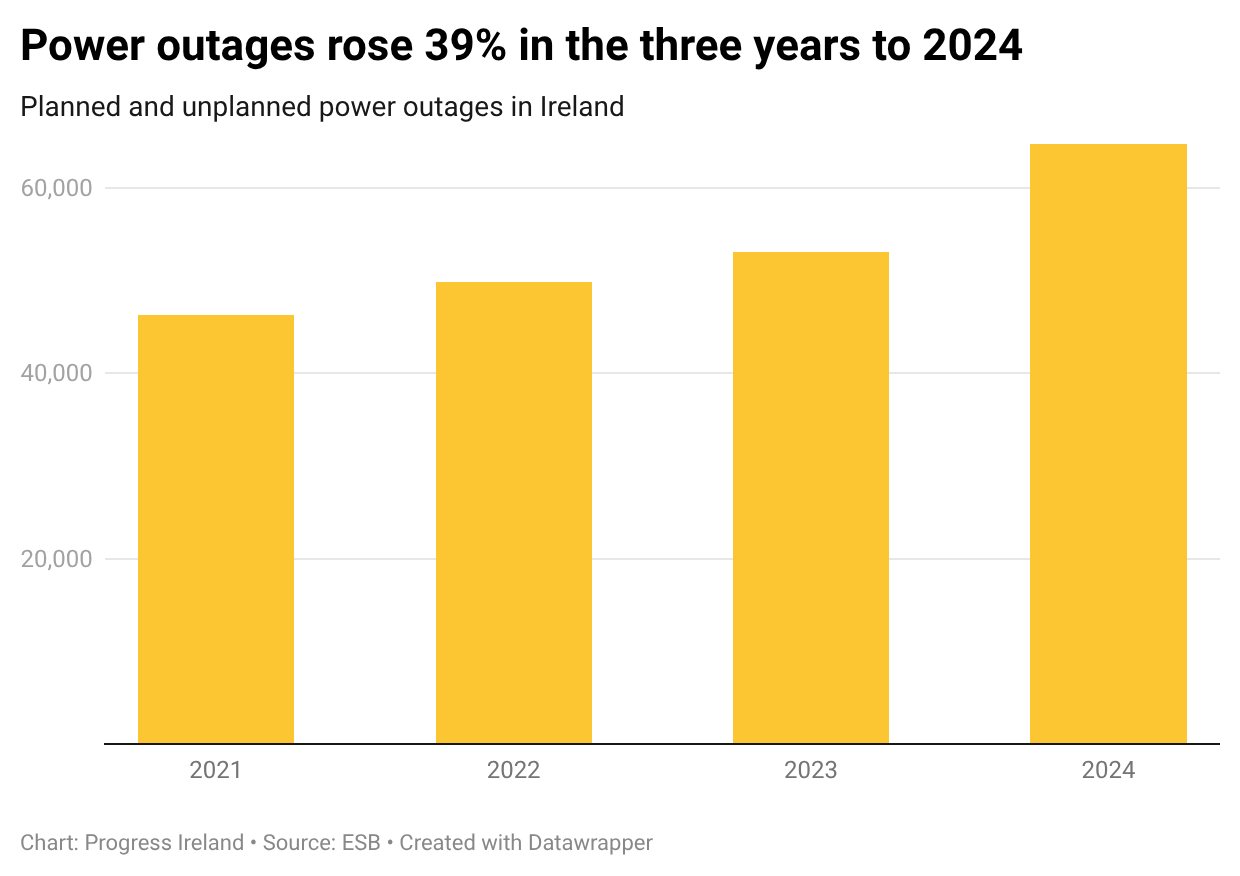
Grid upgrades are necessary for the green transition, for energy security, and to lower electricity prices. Hundreds of gigawatts of wind power is waiting to get online. But slow and uncertain permitting is getting in the way. As the Draghi report identified, “[a] lengthy and uncertain permitting process for new power supply and grids is a major obstacle to faster installation of new capacity” and environmental analysis plays a significant role in that process. The result is high energy costs, an uncompetitive business environment, and the loss of manufacturing jobs.
Aarhus Convention
Lastly, the access to justice pillar of the Aarhus Convention deserves scrutiny. It gives very wide standing for potential judicial reviews, allowing individuals and NGOs to bring cases. The point here is not that judicial decisions should never be challenged, but that widening the scope of who can bring a challenge leads to many more court cases. The Aarhus Convention can effectively be used to delay projects while the court process takes place, even when the projects would be good for the environment, such as €3 billion of wind farms in Spain.
Judicial reviews are now taken for granted in many places. In Ireland, Dublin’s proposed metro has been mired in planning delays for a decade, but judicial reviews are widely anticipated after planning approval. The result is that Ireland’s most important city will remain reliant on cars and buses for longer.
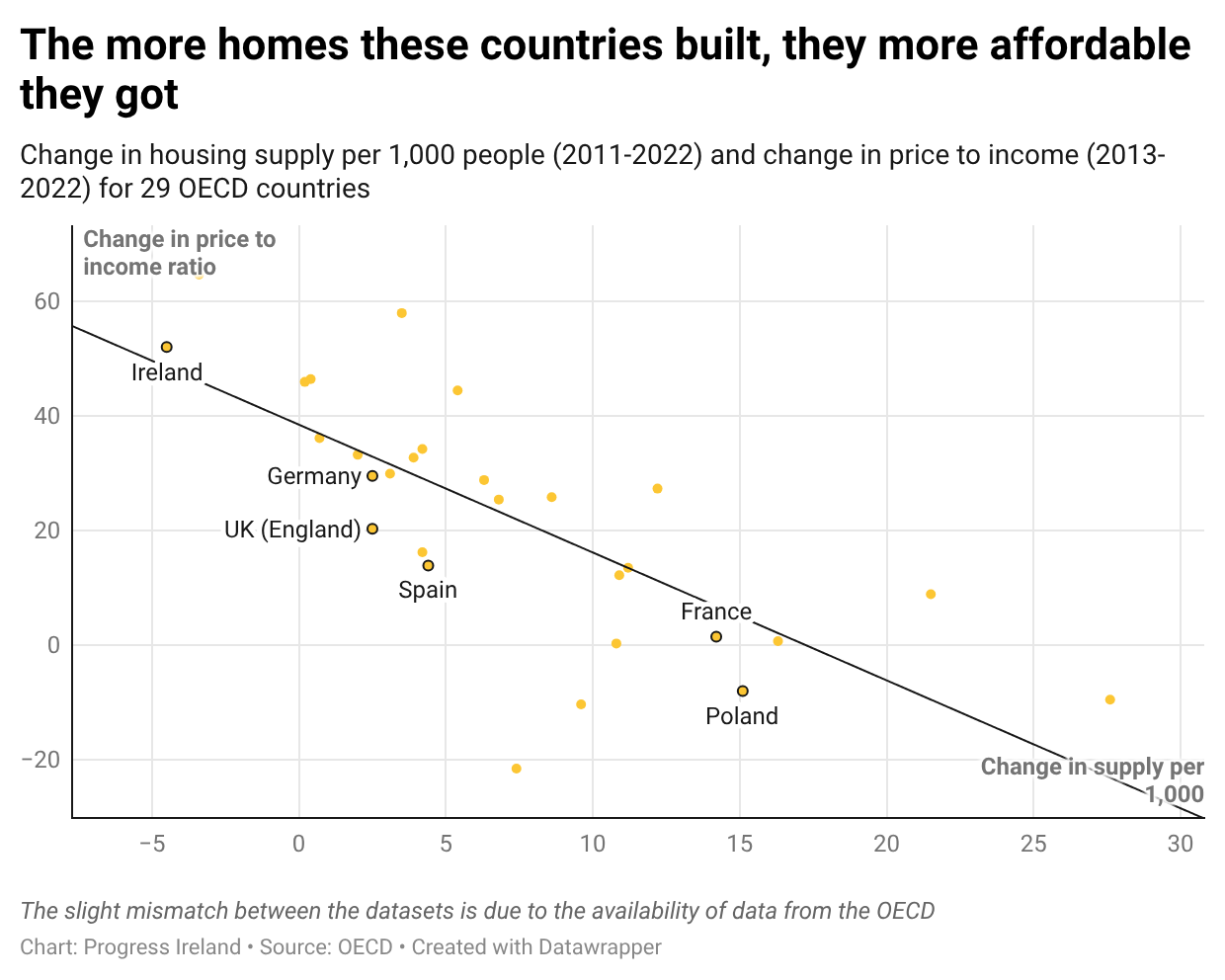
It’s important to acknowledge that there is variation across different countries in how these directives are implemented in national law. Some, such as Ireland, have gone above the requirements of directives, and made challenges easier within their jurisdictions. However, it is possible to critique directives as well as member state implementation. The downstream regulations that they have created have a measurable impact: higher energy prices, increased emissions, and fewer homes and buildings.
The path forward
Europe has its own version of what’s been described in America as a “procedure fetish”, a term first coined in a 2019 paper by professor Nicholas Bagley. It describes how inflexible rules (including around environmental law) frustrate the actions needed to address our urgent problems, often undermining the goal that the rule was meant to promote in the first place.
If Europe is to grow again, it needs to act. What follows is a tentative sketch of how we can have growth without costing the earth.
First, trying to mitigate every possible environmental impact at a given site, as the Habitats Directive and associated case law requires, is prohibitively expensive and often extremely inefficient. Developers may spend tens of millions protecting a species common in one area, when that species can be helped more by spending tens of thousands where it is at risk elsewhere in the Union. A better, more predictable version of Habitats would allow developers to pay into a centralised fund, which can then be used to protect and grow species populations elsewhere, where interventions will be more cost effective. The principle at work here is similar to carbon offsets, where actions elsewhere are used to mitigate otherwise unavoidable emissions in a given place.
Along similar lines, species that are rare in one place are protected in places where they’re common – protection could be more localised instead, rather than applying a single rule to all of Europe.
Second, the bar for environmental impact assessments could be raised for projects with a high opportunity cost, such as green energy and defense. At the moment, European case law on the Habitats Directive requires an appropriate assessment to be carried out if the possibility of impact on an important habitat “cannot be ruled out”. Consider how high a bar this is – can you prove that your project will have no effect? The result is that surveys proliferate, adding legal risk and financial costs. Green energy projects will help the environment by reducing emissions; they should enjoy higher EIA thresholds or even exemptions.
Third, the Aarhus Convention should not be a license to delay projects endlessly. There is a limited place for judicial review: to establish the legality of actions, not to slow down projects that a small minority don’t like. We already have legal processes to establish whether a project should go ahead, and not every large project should be dragged through the courts. This is especially true when the project would help us achieve climate goals and energy security.
Europe needs to change course. As Mario Draghi recently remarked, “To carry on as usual is to resign ourselves to falling behind.” The costs of inaction are already all around us, even if many are illegible to regulators with a single remit: businesses that are never started or grown; salaries that do not go up; people that are not lifted out of poverty; clean energy that isn’t generated; public infrastructure that isn’t built. We live in an invisible graveyard of European ambitions.
There are common-sense, win-win policies that can deliver growth and help our environment at the same time. All we need is the boldness and ambition to enact them.
If you’d like to discuss EU environmental directives and their impact on competitiveness, you can reach me at fergus@progressireland.org, on LinkedIn, or on X.