Today, Wednesday the 30th of July, Progress Ireland will be hosting our monthly meet-up at The Duke from 18:15 to 20:00. Call down for a chat about policy, housing, roads, tunnels, companies, governments, and what Ireland should do next.
What a country makes easy and what it makes hard shows what it cares about.
What’s easy in Ireland? Employment statistics suggest that getting a job is relatively easy. As a matter of policy, previous governments were relentless about creating jobs. Getting a passport is easy too. Over half of renewals take just two days.
What’s hard in Ireland? Building is hard. Our regulations make everything from bus and cycle lanes to seomraí and apartment blocks difficult to build.
But in Ireland, we don’t just make small improvements difficult. In Ireland, even the most important infrastructure projects have been caught up in delays, squashed by the courts, or bogged down in planning.
As Ireland has found increasingly technical reasons to say No to major projects, Canada is beginning to say Yes.
Mark Carney’s government recently passed the Building Canada Act. The goal of the Act is in its name: it aims to make it easier to build major projects in Canada.
The Building Canada Act does one simple thing that Irish law does not: it takes nationally important infrastructure projects seriously.
Today, I am going to discuss how Ireland has made it too difficult to build infrastructure and what we can learn from the Building Canada Act.
How Ireland doesn’t take major infrastructure seriously
Take the Greater Dublin Drainage project (GDD).
Dublin’s wastewater capacity is already at its limit. By 2028, without the GDD, Uisce Éireann will be unable to grant new connections to the wastewater network in major parts of the Greater Dublin Area (though ongoing work will buy time by improving capacity by 15 per cent).
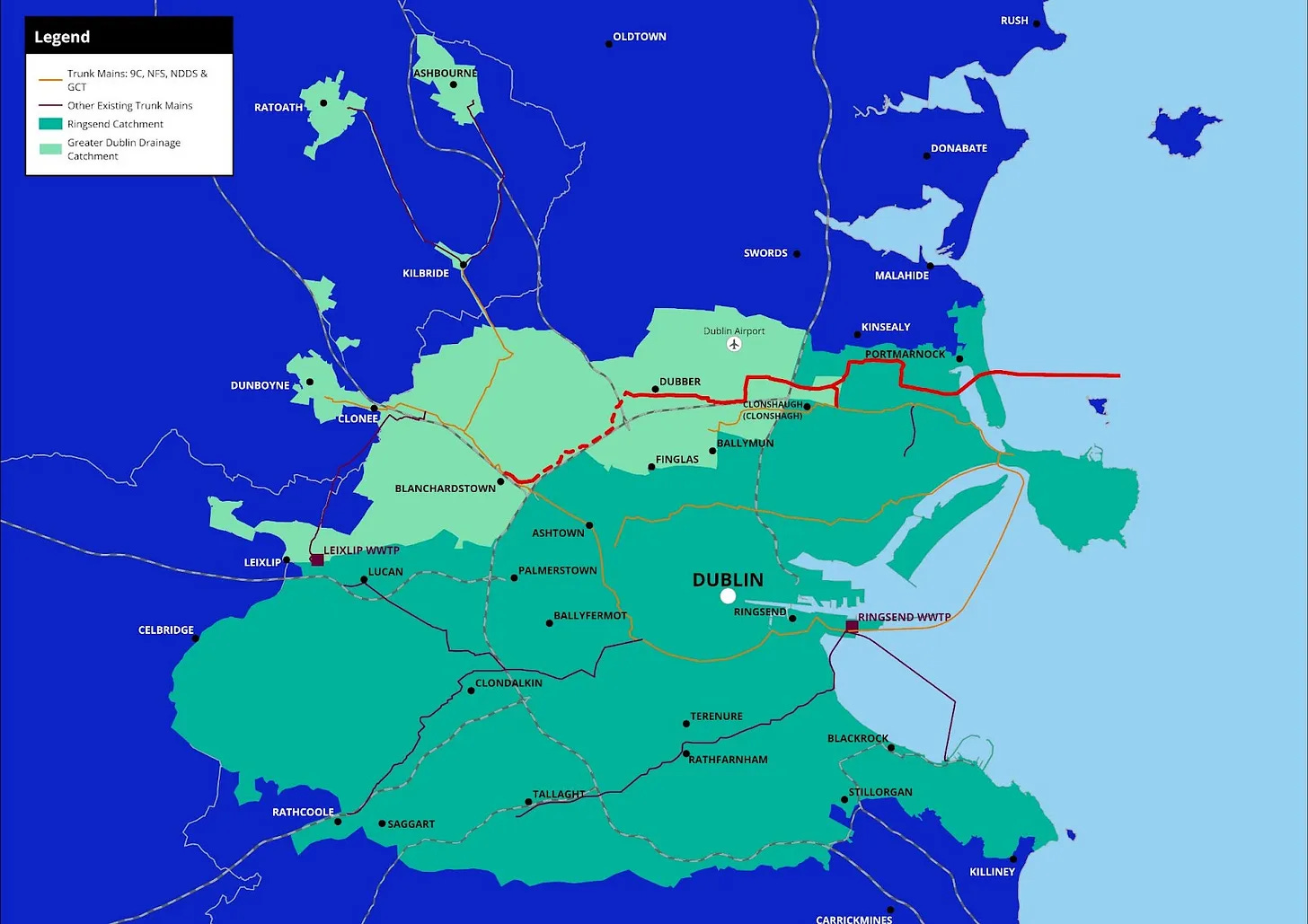
The GDD is not only important for its own sake. For obvious enough reasons, it is important that a country has a functioning wastewater system. Without it, raw sewage would be pumped into our rivers, seas, and oceans.
Less obviously, without a boost in wastewater capacity, there will be a hard cap on how many homes we can build and on how many new businesses, factories, and schools can be opened. But if it is so important, why is it taking so long?
The GDD has been running the gauntlet of procedures for 20 years. The need for the GDD has been discussed since 2005. It obtained planning permission in 2019 (which, to be clear, only took a year to achieve).
That 2019 permission was quashed by the courts in a judicial review case in 2020. The courts decided that An Bord Pleanála failed to comply with Article 44 of the Waste Water Discharge (Authorisation) Regulations 2007. That article compels the authority to seek the observations of the Environmental Protection Agency on the likely impact of the proposed development.
The GDD has only now finally received planning permission from An Coimisiún Pleanála. In the meantime, the estimated costs have ballooned to approximately €1.3 billion.
But it isn’t over yet. Before construction can begin, Uisce Éireann needs to receive further statutory consents, such as a wastewater discharge licence from the Environmental Protection Agency (EPA).
Nationally significant infrastructure
All of this is to say: even a project as nationally important as GDD has been tied up in knots by the Irish system of delivering infrastructure.
Irish policy recognises that some projects are more important than others. Building a bike lane in Kinsale is important if you live in Kinsale and like to cycle. But building a wind farm with more than 50 megawatts of capacity is important for everyone in the country. For these projects the category of Strategic Infrastructure Development (SID) is reserved.
Being an SID allows a project to go directly to An Coimisiún Pleanála (formerly An Bord Pleanála). The basic and intuitive idea is that local councils shouldn’t decide on nationally important projects. For one thing, SIDs often traverse more than one council area. For another, nationally significant projects require national level decision-making.
But this basic recognition of national importance has not translated into accelerated building. Saying something is important is different than treating it as important.
The new planning Act, for instance, does little to accelerate the delivery of SIDs. In the new Planning and Development Act 2024, SIDs are subject to a new statutory timeline of 48 weeks from receipt of an application to a decision (with some caveats). The pre-application phase is now subject to timelines too. The Minister can add to the list of SIDs by statutory instrument (before, the government would need primary legislation).
But as we have seen, the SID process still allows nationally important projects to get bogged down in delays. When the provisions of the new Act come into play, it is unlikely that they will unlock the trains, metros, water pipes, and pylons that Ireland needs.
And that is because, if you ask the government, the main culprit is not the SID process itself nor the infrastructure guidelines but the legal system. To quote one representative opinion:
One of the main blockages to progress has been abuse of court procedure by objectors to almost every major infrastructural project, and plenty of smaller ones as well. The result has been indefinite delays to critical water, energy and transport projects as well as housing development.
GDD was, for instance, not blocked by An Bord Pleanála. Rather it was squashed by one local objector, the courts, and the regulations that enabled it all to happen.
The common good and the common law
So, how do we stop it from happening again? How do we make it easy to build important projects?
This month, the Joint Oireachtas Committee on Infrastructure set out their recommendations. One of those recommendations was that the Irish planning system (including the courts) should be directed toward the “common good.” To quote to the relevant section in full:
Currently, the planning system can result in severe delays to projects as any objection may result in a full judicial review and high court proceedings, lasting several years. This can result in a ripple effect where an environmental impact assessment may become out of date and have to be repeated after the judicial review has finished, adding to the delay. Additionally, policies such as construction standards that were in place when the project was first mooted, may be replaced by new policies, again resulting in further delay.
The common good should be given greater weight in the planning process. It is the intention of the Committee to examine planning regulations as they apply to large infrastructure projects, to explore this matter further.
But what does giving the “common good” a “greater weight” in our planning system mean? A good place to start would be Prime Minister Mark Carney’s Building Canada Act.
…yes I said yes I will Yes
Canada’s new system says Yes to nationally important infrastructure by default. Canada’s answer to the question of how to take the common good seriously is to say Yes to major projects.
In Ireland, we call the most important infrastructure ‘strategic.’ In Canada’s new Act, they call the projects ‘National Interest Projects’ or NIPs. What counts as a NIP is decided according to national security, economic benefits, contribution to clean energy and climate goals, among other things.
But the difference is being a National Interest Project carries weight in a way that being a SID does not. It does this in three ways.
First, there is a presumption in favour of NIPs. Section 6(1) of the new Act reads:
Deeming — favourable determinations, findings and opinions
6 (1) Every determination and finding that has to be made and every opinion that has to be formed in order for an authorization to be granted in respect of a national interest project is deemed to be made or formed, as the case may be, in favour of permitting the project to be carried out in whole or in part
SIDs are guilty until proven innocent. In Canada, NIPs are innocent until proven guilty.
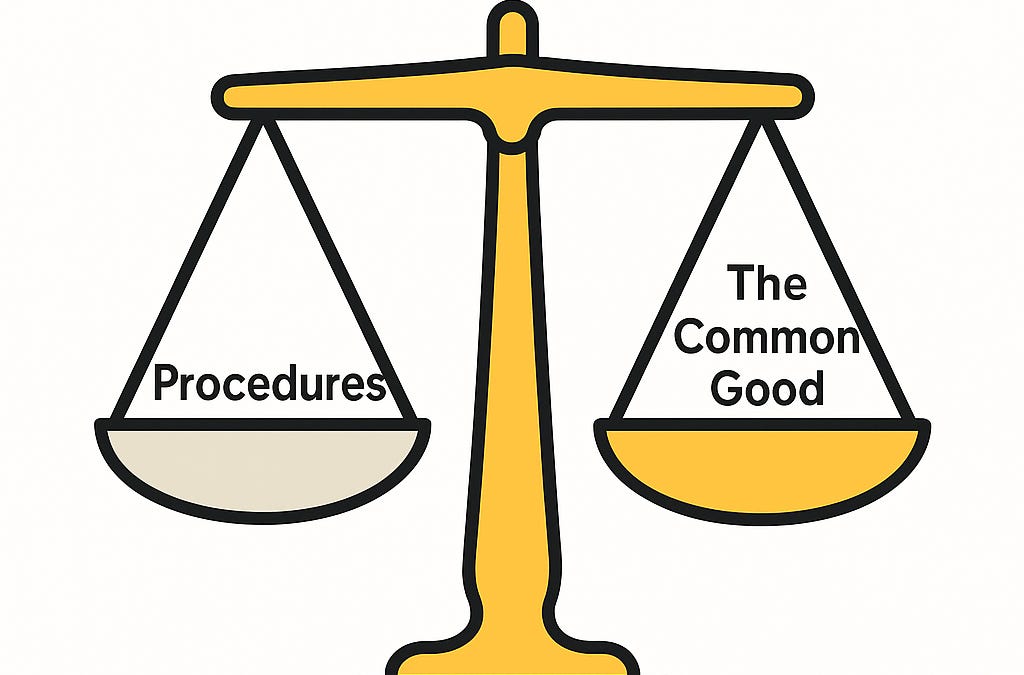
Picture a decision-making scales. In Ireland, the process side is stacked. It is heavy by default. In the GDD’s case, a missing EPA consultation outweighed over 1,000 pages of environmental evidence.
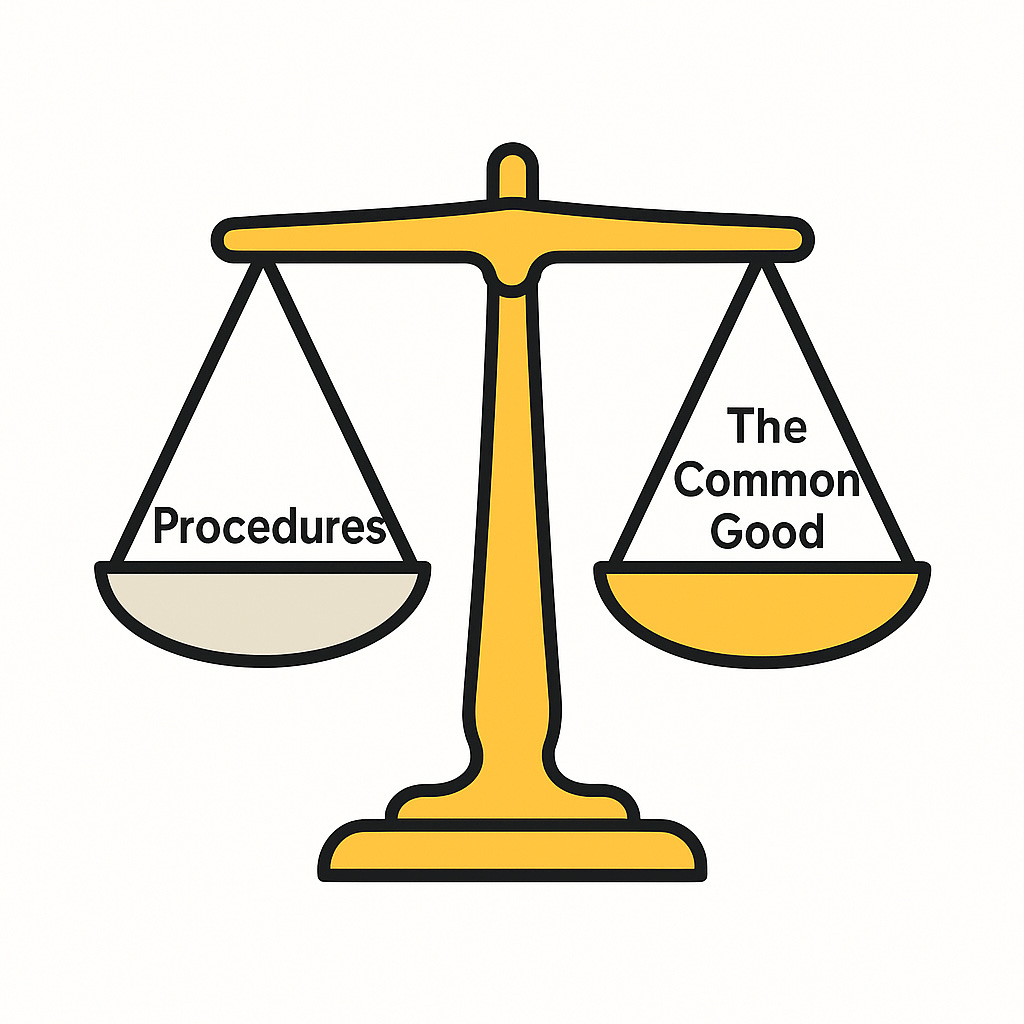
Canada’s new Act drops a lead weight on the other side. It sides, from the start, with the common good. The presumption created is clear: nationally significant infrastructure get priority over process. Processes will still matter. But regulators will have to argue why not, rather than forcing the government to argue why.
Second, Canadian Ministers are empowered by the Act to issue an Authorisation Document. Similar to Railway Orders which used to be vested in the Minister’s office in Ireland, Authorisation Documents replace the existing federal permitting system.
As we saw, GDD has now gotten planning permission but it must now await further approval from other parts of the State. With this Act, Canada has created a single consolidated approval for NIPs.
Authorisation Documents are not themselves statutory instruments. This is important for the simple reason that statutory instruments can be struck down by the courts for technical details or specific procedural errors.
The Authorisation Document itself contains all of the relevant impact studies, conditions, and recommendations from federal agencies. It may take up to two years to put each document together. But once the document is issued, the project is considered approved.
Third, Impact Assessments (governed in Canada by the Impact Assessment Act) have been streamlined for NIPs. All relevant impact assessments still must be carried out. But their findings are presumed to be, as above, in favour of the project.
The Act gives the Cabinet the powers to exempt NIPs from outstanding regulations. It also gives the government the powers to make new regulations specifically for the purposes of carrying out a NIP.
As the Irish government reviews the Accelerating Infrastructure Taskforce‘s findings, it should look to Canada as an exemplar.
To be sure, EU law makes the task of Irish policymakers trickier. We cannot simply transpose the Building Canada Act into the Building Ireland Act. Nevertheless, there is nothing stopping us from learning from its central lesson: taking the common good seriously means laws which favour saying Yes to new projects.