There’s no doubt that without a planning system, the country would be a mess. We wouldn’t have functional streets and drains. We’d have much fewer nice parks and greenways. People’s homes would be overshadowed. Hog rendering factories would be sited beside primary schools.
The problem with our planning system comes when, like an overactive immune system, it blocks things we need. To cite a specific example: Ireland’s National Planning Framework intentionally blocks house building in the counties of Dublin, Meath, Wicklow and Kildare.
Blocking housing is bad for many reasons, but chief among them is that it makes housing more expensive. My rough estimate is that the excesses of the planning system cost Irish people about €26,000 each. That’s €70,200 per household.
The land-with-planning premium
Where did I get €70,200? I got it by subtracting the accounting value of houses — as in, the value of the physical structures, not including the land they sit on — from house prices. The difference between those two numbers gives you a sense of how much the planning system pushes up house prices.
The accounting value of a house is the value of the structure, allowing for depreciation. Houses depreciate. Without renovation, they last about 80 years. So, by this metric, an 80-year-old structure that had never been renovated would be deemed worthless; a brand-new structure would be worth an amount equal to the construction cost of a new home. The Central Statistics Office depreciate these structures over 80 years at 1.6 per cent per year.
We are unaccustomed to thinking about houses in these terms. We are accustomed to thinking about the value of a house as the number you see on Daft.ie – whatever its state of decay happens to be. The land under a house is assumed to be included.
The two numbers tell you the difference between what people are willing to pay to buy homes in Ireland, and what the structures they’re buying are worth. It turns out that, in Ireland, people are willing to pay about twice the accounting value of the physical structures they’re buying. The difference between the two numbers is the price they’re willing to pay for the land.
Why pay so much for land? The obvious answer is that it’s the going rate. But why is it the going rate?
You’d expect the market price for a home to to be somewhat higher than the construction cost of a home. It should take into account developer profit, land cost, and the costs of servicing the land.
What, then, is a reasonable price for land? If land were freely available, the price paid would be the cost of agricultural land plus the costs of servicing it. Agricultural land costs about €10,000 per acre. A 0.1-acre site for a home would therefore cost about €1,000. Servicing the site with roads, drainage and so on might cost €50,000. So in a world where land was freely available to build on, the land element of housing should only cost €51,000 or so per site – less than 15 per cent of what it costs to build a home in Ireland.
All of this assumes land with planning permission is freely available: that a builder can build freely either on the edge of town or can build more densely on land in the middle of town. In Ireland, this is not the case. We can’t freely build houses on green fields at the edge of the city; we can’t freely build on gardens; we can’t freely turn detached houses with big gardens into a mid-rise apartment complex. In dozens of ways, big and small, the planning system stops land being used for housing. Whatever land the system does allow for housing gets bid up in value. That’s why half the value of Irish homes is for the permissioned land they’re sitting on. I’ll call it the land-with-planning premium.
The statistics are a bit obscure but the idea is simple. In a functioning market, a good should not sell for much more than it cost to make. The fact that Irish housing costs much more than it costs to built tells you there’s an artificial scarcity going on.
Glaeser and Gyourko (2017) put it this way: “If housing prices are above [construction’] cost in a given area, then the housing market is not functioning well—and housing is too expensive for all households in the market, not just for poorer ones. The gap between price and production cost can be understood as a regulatory tax”.
How Ireland compares
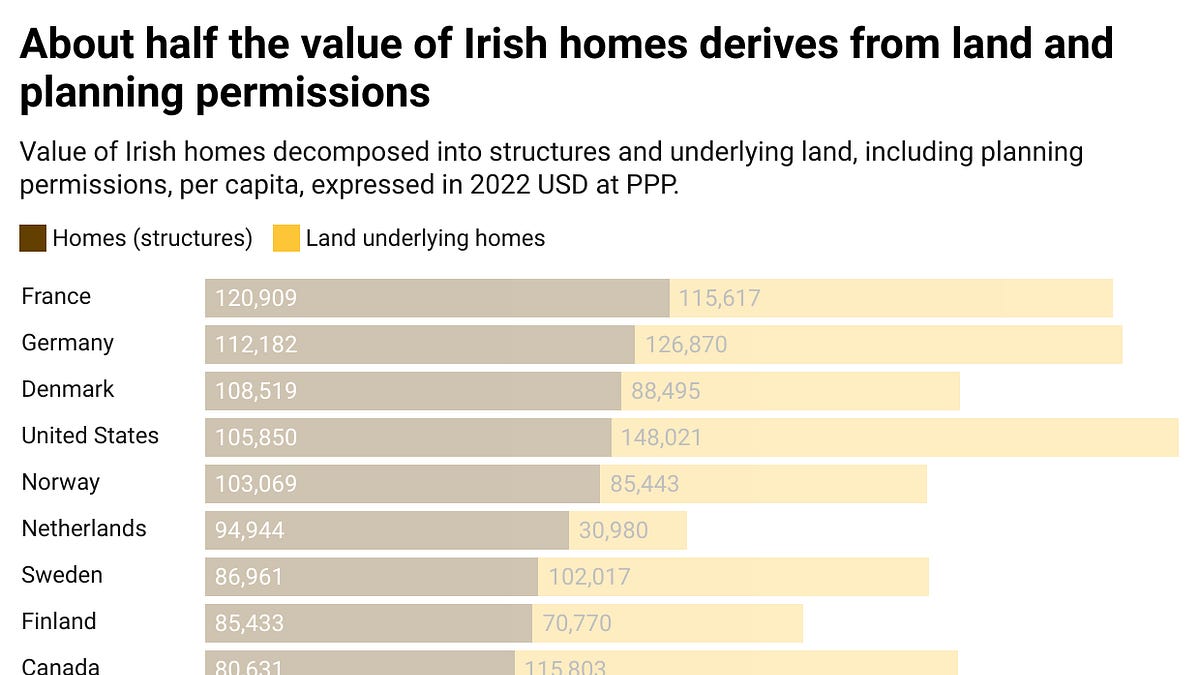
Ireland is not unusual in this. Every country has a planning system that inhibits the construction of new housing. The following chart shows the value of homes (ie structures) as well as their underlying land, per capita. Ireland doesn’t stand out.
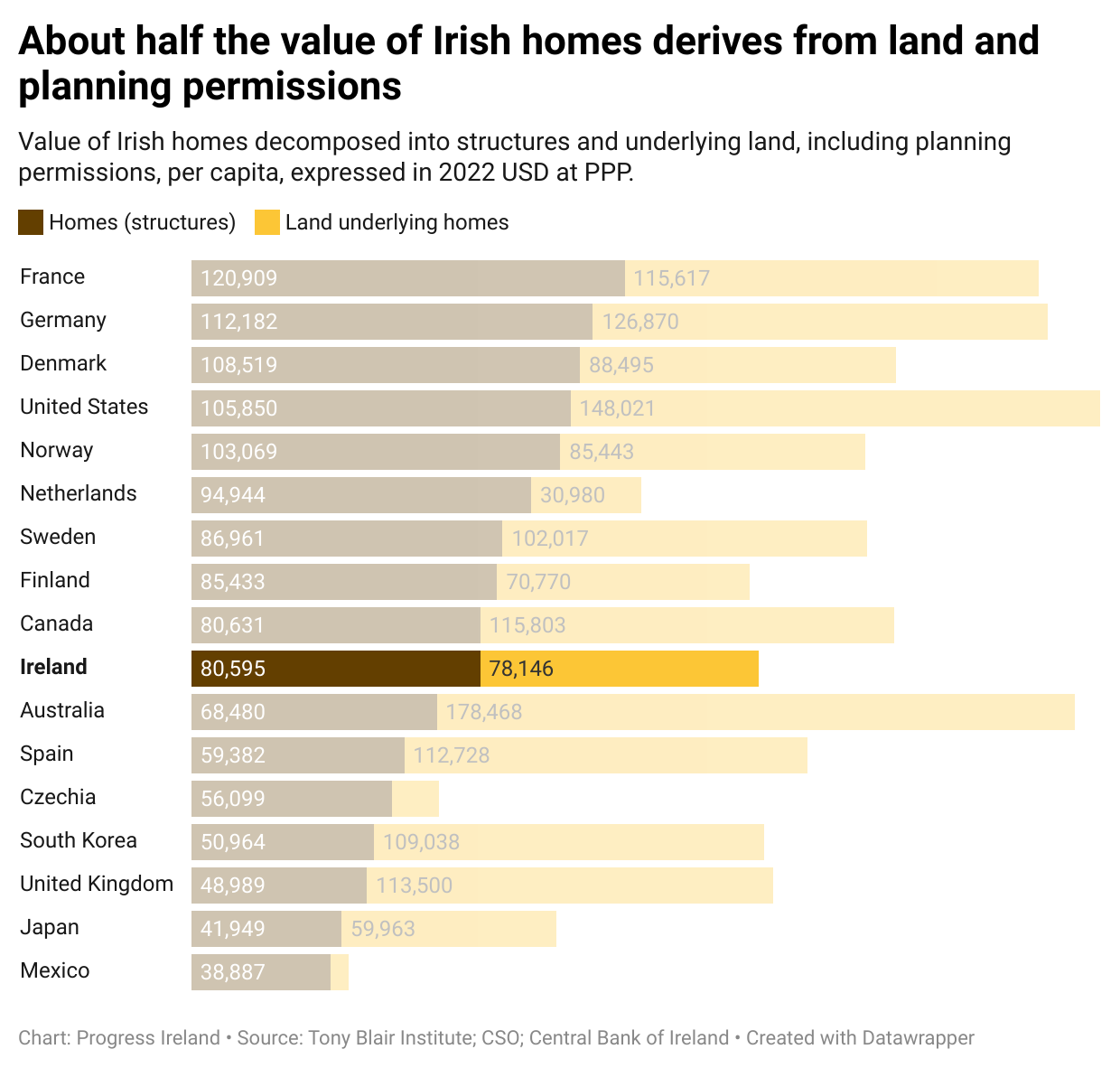
(A caveat: this chart is derived from datasets from multiple agencies in over a dozen countries. So there will be methodological differences. I would treat this as a broad brush picture of what’s going on. For example, Irish construction costs have been higher than European peers. In recent years, the consultancy Turner and Townsend found it cost thirty30 per cent more to build a townhouse in Ireland than peer cities Paris, Amsterdam and Munich. If Irish construction costs were equivalent to those cities, the land portion of Irish market prices would be expected to go up.)
If we’re interested in the degree to which the planning system puts sand in the gears of housing construction, which drives up housing costs, the ratio of market price to construction cost – aka the land-with-planning premium – is the number that matters. Here’s how Ireland compares in that respect.
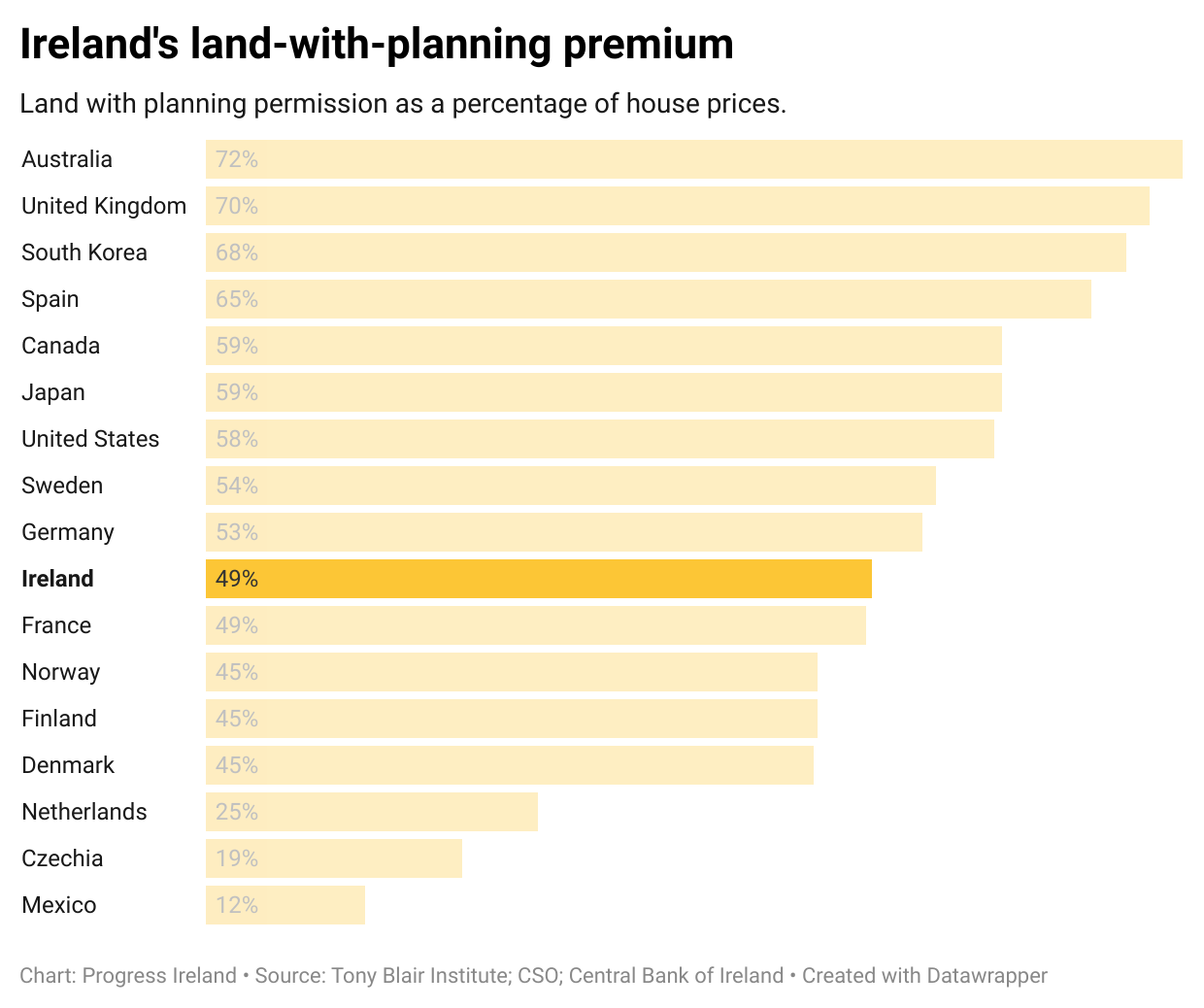
From this, we can say that Ireland’s planning system constrains building by… a normal amount. I’m hesitant to say that Ireland is definitely more restrictive than Denmark and less restrictive than the United States. But it’s surely more restrictive than the Netherlands and less restrictive than the UK.
The problem
You might say, then, that Ireland is a perfectly normal country. What’s the problem?
The problem is that housing costs are a universal problem in modern rich countries. And the rationing of land makes housing more expensive.
Another problem is that this is a newish phenomenon. Up until quite recently, housing didn’t cost much more than construction costs. The two numbers started to get out of whack in the 1960s and 70s in the USA. And the situation has continually gotten worse.
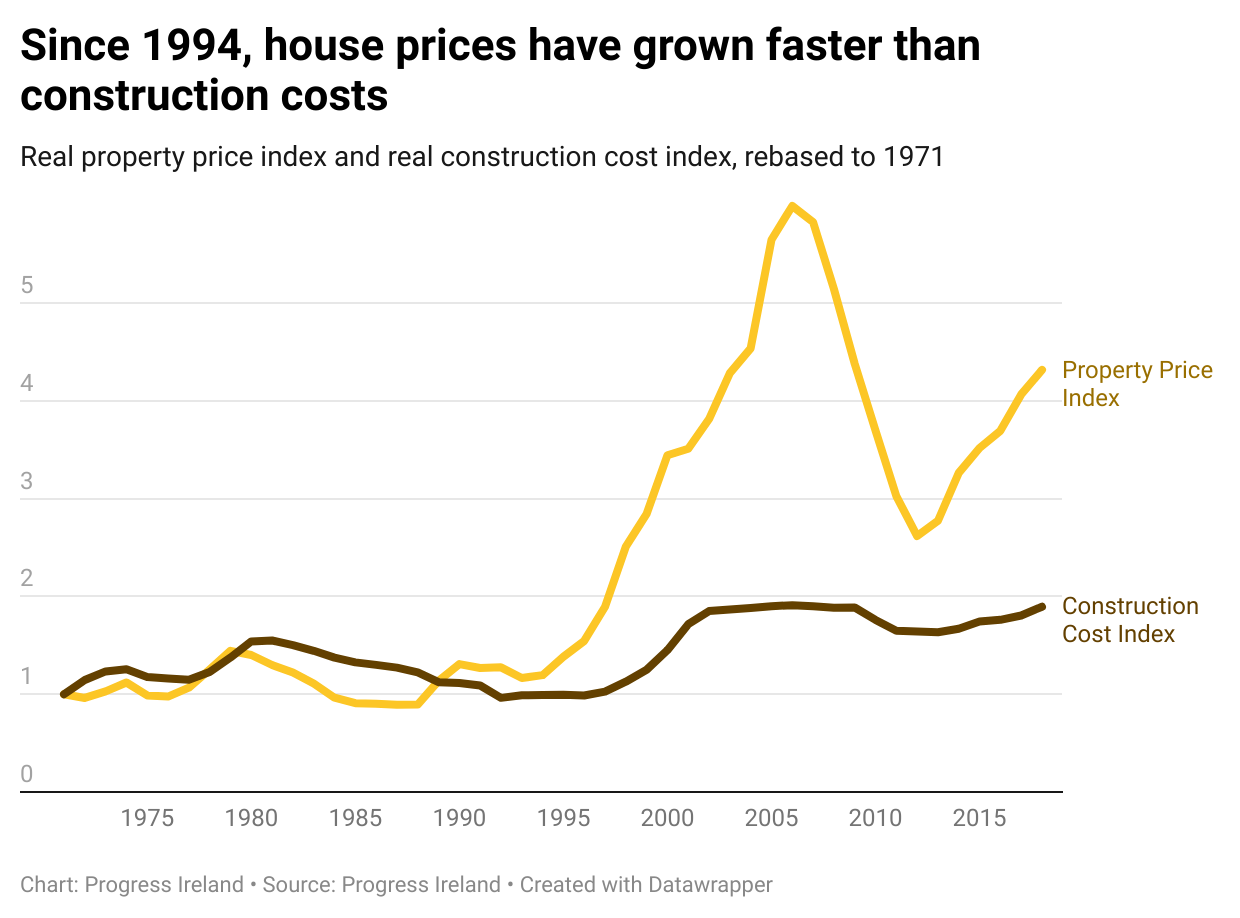
The following data is taken from Seán O’Neill McPartlin’s upcoming dissertation. It shows construction costs and house prices in Ireland between 1971 and 2018, adjusted for inflation. As you can see, house prices over that time grew at a much faster rate than construction costs. This implies the land-with-planning premium has been rising sharply since the mid-1990s.
There’s a striking similarity between Seán’s brand new data and that from the US in the same period. The following chart is taken from Gyourko and Molloy’s chapter in the Handbook of Regional and Urban Economics (2015).
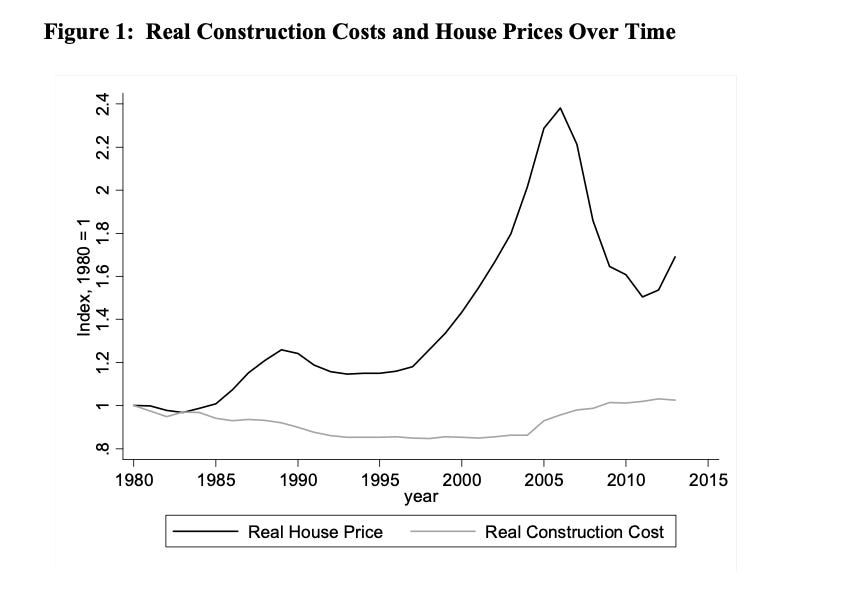
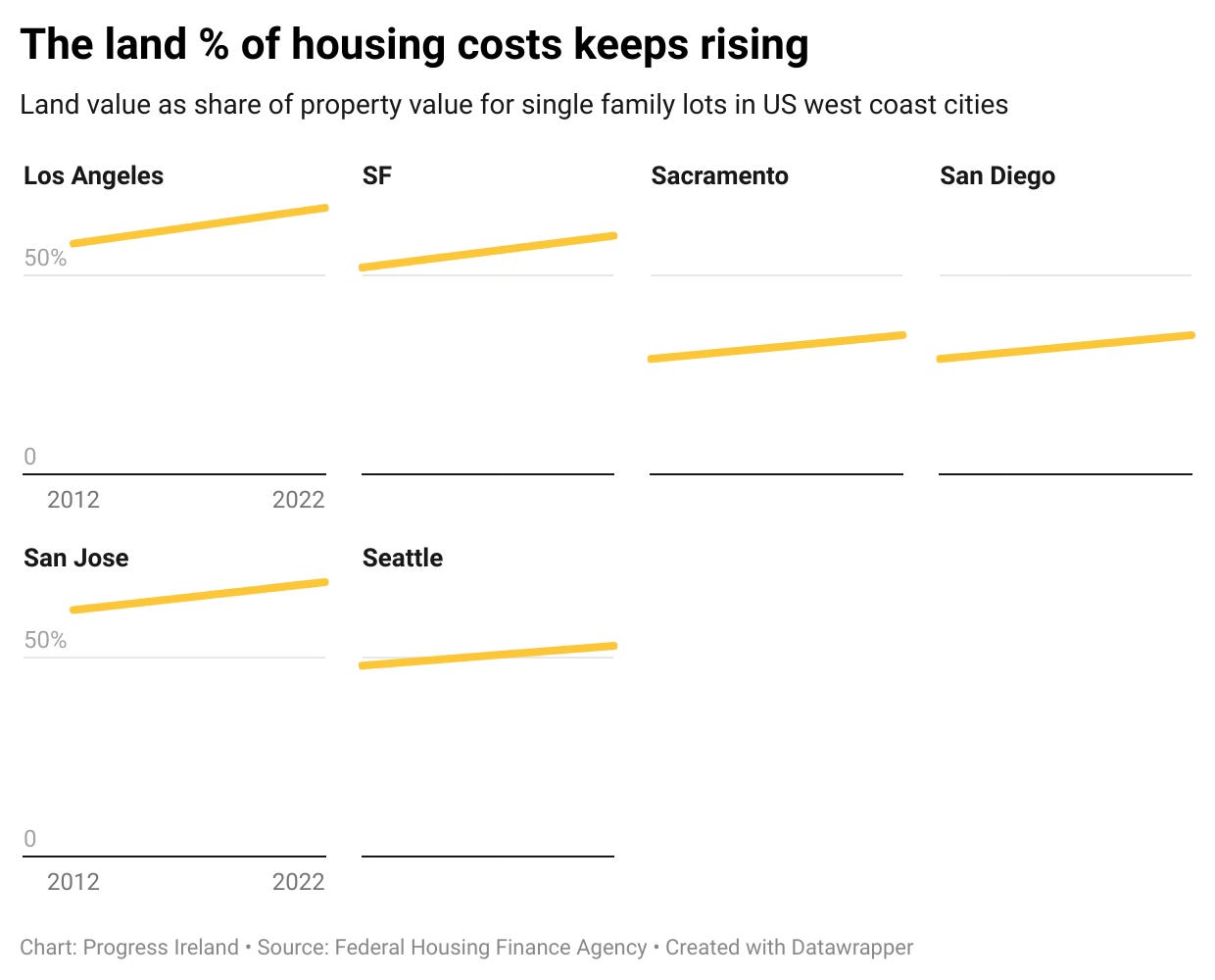
This trend isn’t played out. The land portion of housing costs continues to rise. The following chart shows the land portion of housing costs for West Coast US cities between 2012 and 2022. The same trend is to be seen all over the US (where the data is best).
What about the €70,000 per household figure from this email’s subject line? I said the excesses planning system costs each household about €70,000. By this I mean the difference between what we pay for land-with-planning now, and what we would pay if it weren’t rationed so strictly.
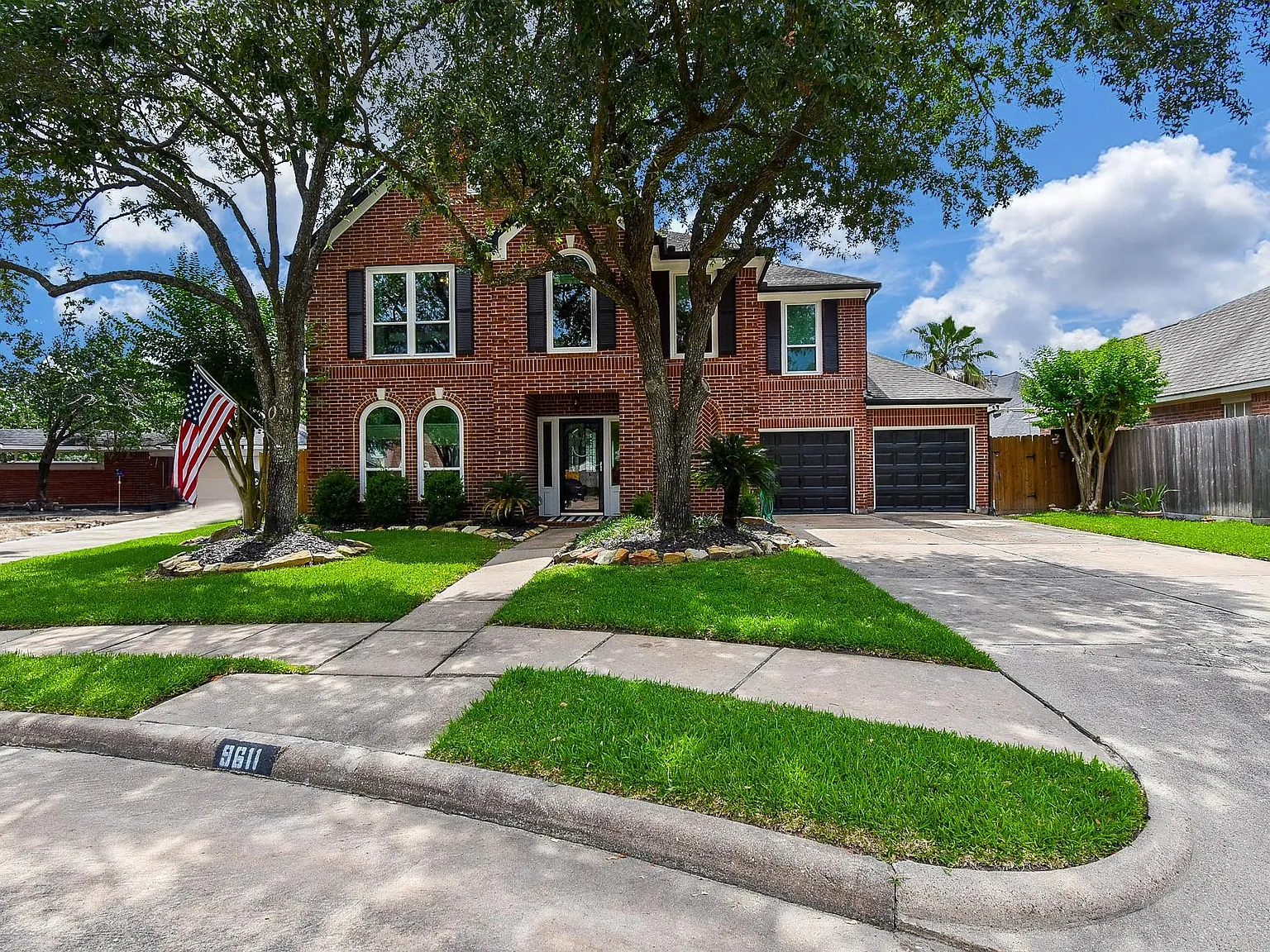
What’s a reasonable amount to pay? Houston is a big city that’s known for being build-friendly. Over there, the land-with-planning premium was 32 per cent in 2018. If Ireland’s land-with-planning premium were reduced to that of Houston, the amount of national wealth allocated to housing (and freed up for something else) would go down by €26,000 per person. That’s €70,200 per household.
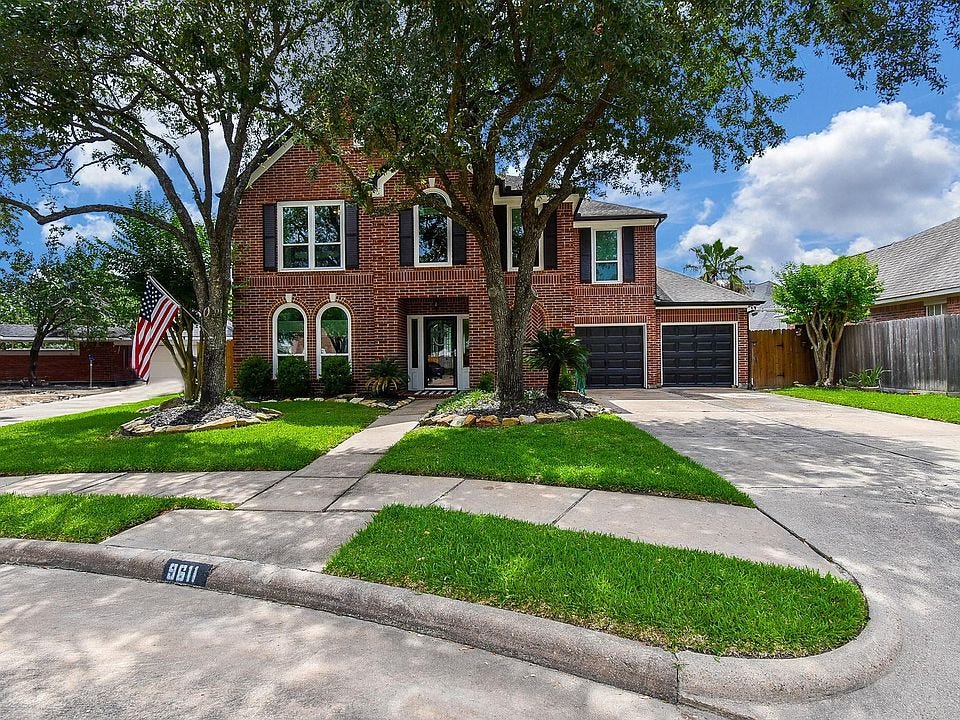
A quick scan of Houston’s homes for sale supports that intuition. This four-bed home with a pool costs less than the average Irish home. It’s a 26-minute drive from downtown Houston.
It’s hard to think of a public policy that imposes a greater cost.