I am a YIMBY because it works
At Progress Ireland, we are YIMBYs. That acronym stands for ‘yes in my backyard’, a broad group which supports the construction of housing.
Our work often focuses on the question of how to get stuff built. We write about planning rules, lowering construction costs, freeing up land, simplifying European directives, and incentivising locals and councils to support more building. But we rarely say why we are YIMBYs.
In short, we are YIMBYs because we think YIMBY ideas work. Today, there is no better place to look for evidence of this than New Zealand. Until recently, New Zealand’s housing crisis was even worse than Ireland’s. Relative to incomes, houses in Auckland were a lot less affordable than in Dublin. But in the last five years, their government figured it out. Rents are now 20 per cent cheaper than the path they were on. House prices are 40 per cent lower than the path they were on.
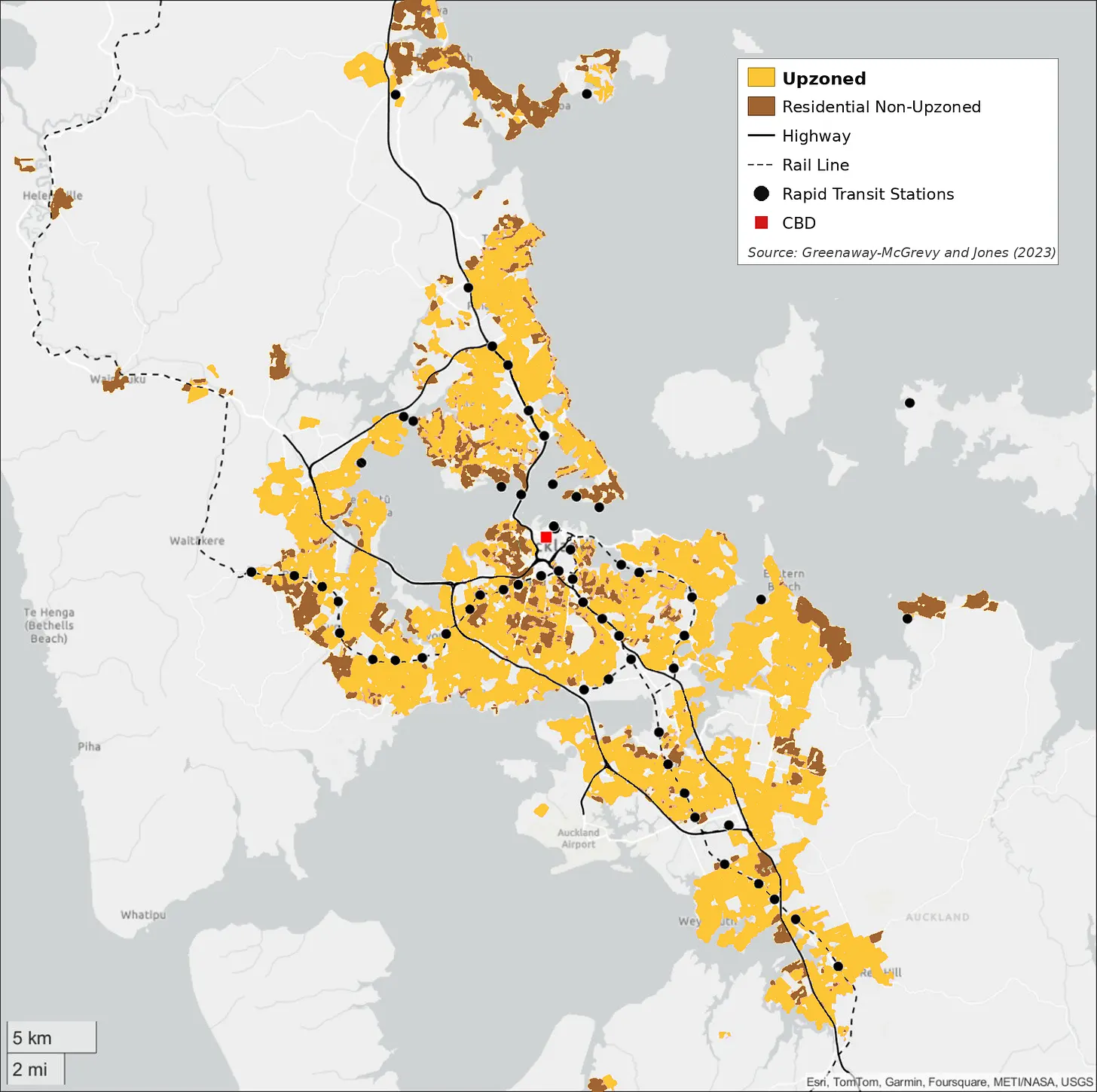
How did they do it? The change started in two cities: Auckland and Lower Hutt. In Auckland in 2016 the city passed the Auckland Unitary Plan or AUP (this is the equivalent of a development plan in Ireland). The plan dramatically upzoned the city, meaning that the city allowed a lot more development than before. Around the same time, the city of Lower Hutt did the same. In both cities, land zoned for “single houses” was redesignated to allow for townhouses and small apartment buildings.
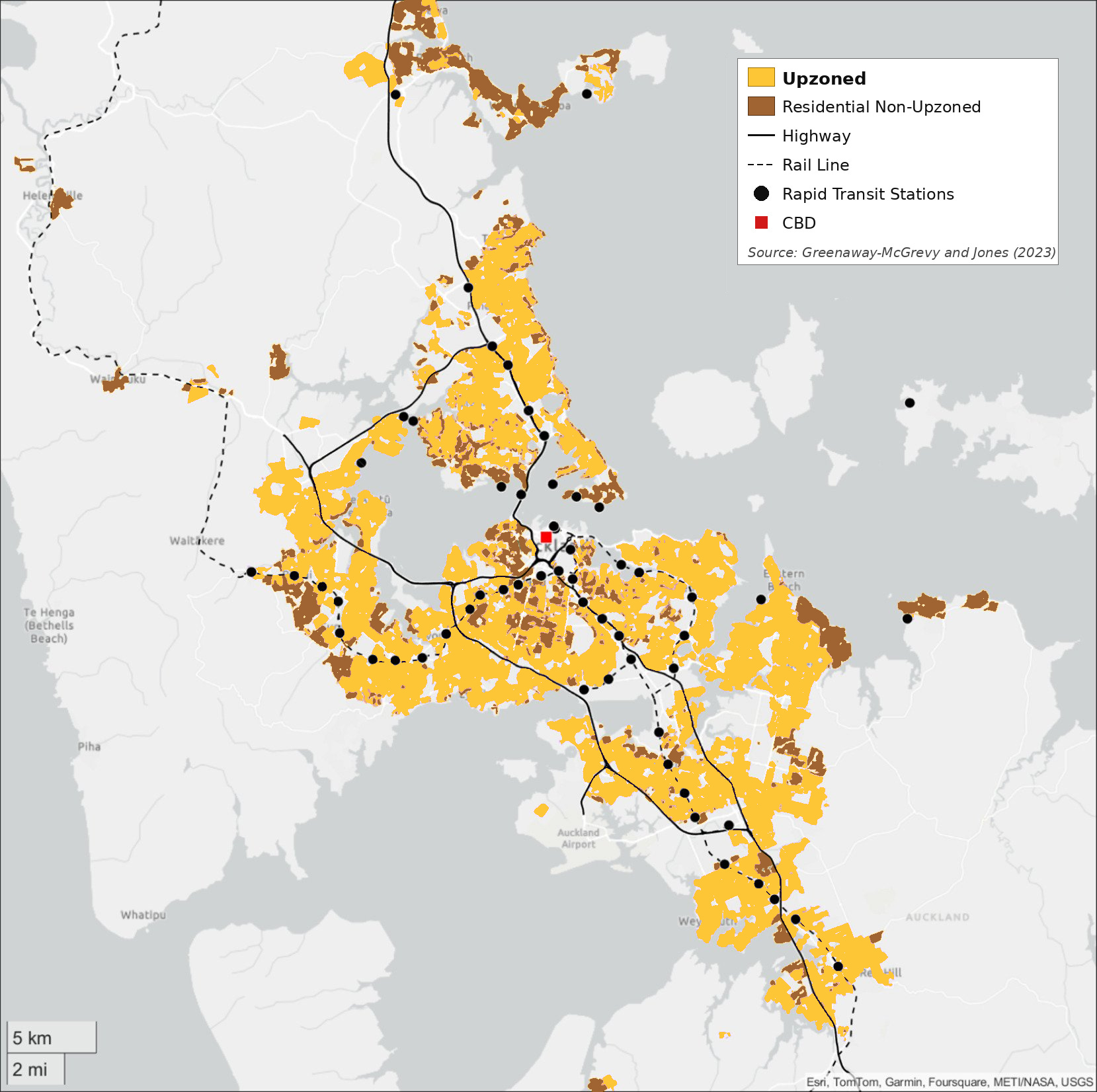
This is the equivalent of Dublin stating, overnight, that in places like Fairview, Marino, Chapelizod, and East Wall landowners could now build apartment buildings or townhouses “by right”.
They made sure to protect historic areas and some suburbs but the scale of the change was unprecedented, about 75 per cent of Auckland’s residential land was changed. In Lower Hutt, the changes affected about 80 per cent of the residentially zoned land.
Both upzonings resulted in a lot of building. Building permits in Auckland approximately doubled within five years. Public or state-built housing saw a threefold increase after the Auckland reform. In Lower Hutt housing permits tripled. Overall, the Auckland plan is estimated to have delivered an additional 43,500 homes in the city between 2016 and 2022.
All of this building had an impact on prices and rents. At a time when median house prices have been rising across New Zealand, they fell in Auckland in real terms.
After inflation, Auckland rents have been essentially flat since the upzoning. In Lower Hutt, rents are down 21 per cent relative to the path they were on. People are spending a smaller percentage of their income on rent in Auckland than they are in the rest of New Zealand.
What about Ireland?
All of this building was achieved by legalising housing in areas where construction was previously constrained. A sceptical reader might say that building housing is legal and encouraged in Ireland and therefore ask: why isn’t Ireland achieving what the Kiwis have?
The answer to that is that Ireland’s planning rules are often remarkably unclear. Dublin City’s development plan has over 400 goals/strategies/policies/objectives. It is the job of the professional planner to weigh all of these up and decide whether development of the kind proposed meets a delicate balance of these (often competing) goals. Whereas in New Zealand, the rules in the Auckland plan made it clear: if your land has residential zoning and it is in an upzoned area, you’re allowed to build a townhouse or small apartment block.
So, what is stopping councils from doing this? They have the power to do it. Planning authorities could more or less upzone their areas if they so wished. National policy explicitly promotes compact growth, so upzoning all of DCC would be in keeping with national policy.
A natural answer is that voters don’t want it. Politicians routinely object to housing, as do local residents. This is sometimes misunderstood, anyone can leave an “observation”, whether positive or negative, on any planning application (this is one thing people call “objections”, the other two are rarer: planning appeals and judicial review).
This answer is, I think, broadly correct. To get stuff built in a modern democracy, you have to have the public’s support. There is no point in a well-meaning councillor upzoing their district, only for the change to be reversed when the next election comes along.
How did the Kiwis achieve that support? It is a somewhat complicated story. In Auckland, the upzoning remained popular enough because the government excluded rich suburbs and historic areas. (In Ireland, it is also true that ‘objectors’ are typically from richer suburbs).
But that’s Auckland, what about the rest of New Zealand? The government’s attempt to expand the lessons of Auckland led to a backlash. The Auckland reforms have been going national since 2020 when Labour introduced the NPS-UD, a planning policy which required all major city councils to permit six-storey buildings within a walkable distance of rapid transport and city centres. In 2021, the policy was expanded to include the MDRS which did for New Zealand’s five largest cities what the AUP did for Auckland: upzoned every residential plot to permit up to three storeys of at least three homes.
The MDRS became politically toxic, as voters began to feel that the changes had gone too far. This was part of why Jacinda Ardern’s and Chris Hipkins’ Labour party lost power.
Getting stuff built while staying popular
Despite the troubles it has faced, New Zealand is still a good case study for Ireland, not just because it built a lot in Auckland and Lower Hutt, but because it is setting out a path to build on that success sustainably.
Development comes with side-effects. Roads get congested if they are not improved quickly enough, as do local bus services and, if you’re lucky, train services. In short: development has local costs. YIMBYs may call the people who don’t like these local costs NIMBYs but that doesn’t change the fact that there are costs. A big part of the puzzle of ending any country’s housing shortage (or infrastructure shortage) is getting to grips with this part of it. The question is: how do we build lots of housing or infrastructure with local support?
To my knowledge, New Zealand is one of the few countries addressing this problem head-on. The current government’s plan Going for Housing Growth addresses the problem of retaining council and local support while building a lot directly. The plan has three pillars: zoning more land, improving infrastructure financing, and incentivising councils to support growth.
This year, the government launched the Incentives for Growth Fund. The basic idea is that councils that allow more housing get more money in return. A clever part of the plan is that the more housing a council permits, the more money it gets per home. This means that councils that permit new homes in large enough numbers will have extra money to improve their roads or invest in local parks. The idea is that local people feel that new housing comes with benefits to them.
The incentive fund is not the only idea of this kind in New Zealand. The MDRS, the national upzoning I mentioned before, is still in effect. But some councils have been allowed to opt-out but with conditions. Under the new plans (which are still being written) councils will not be required to allow three-storey townhouses everywhere if they can prove that they have enabled just as much housing to be delivered somewhere else. Politically, this makes a lot of sense. If the council has lots of greenfields with no neighbours, it can upzone the surrounding fields, and leave the suburbs untouched. If the area is full of pristine nature, you can upzone the suburbs.
These are clever policy ideas. We will find out if they work. What we do know is that the underlying approach of Auckland and Lower Hutt has delivered genuine progress. Rents down, prices down, building up. And what is arguably just as impressive as those results is that New Zealand is now trying to make the approach politically durable. Getting stuff built is one thing. Keeping voters onside while you do it is another, much harder thing. New Zealand is one of the few places seriously grappling with it.
Last updated: