The built environment and biodiversity seem locked in a zero sum battle. It’s thought that new buildings mean that the natural world has to lose out: a new motorway must be bad news for newts, frogs, and bats.
Environmentalists talk about the impact of development. If you’re going to develop a piece of land – building new homes, roads, or energy infrastructure – there’s going to be some impact on the pre-existing species and habitats in and nearby the site.
At the same time, not building things comes at a cost to people, as YIMBYs like us will tell you. Economic growth is an important goal, as is widespread home ownership, and these – along with many other aspirations – require that we build new things.
Our current system of embedding environmental concerns in development isn’t working for nature or people.
One example of the system’s problems is onsite mitigation. This means that when you’re building, say, a railway, you take steps to protect these animals in the same place that the railway is being built. But as we’ll explore below, this approach hasn’t been good for either nature or people.
Nature and development don’t have to be locked into a zero-sum battle. Lots of value is created when building important projects. Better protection of nature can be achieved by pooling funds and finding the best sites to help nature, which are often offsite.
That’s what biodiversity offsetting provides. It is still an emerging policy area, but it offers some promise to get nature and building out of its zero-sum bind.
From bat tunnels to toad pools
There are many ways to approach onsite mitigation. At the lower end, it could involve retaining a portion of the habitat, such as a small wood, perhaps adding a few features in order to enhance it. Interventions can also be more ambitious, especially if a given development involves significant change to a site. A network of ponds could be created, or wildlife crossing infrastructure built.
But at times we lose all sense of proportionality. We all know that there is a limit to how much cost we’re willing to incur for small benefits. When we walk through a forest, we might trample some insects underfoot. But we wouldn’t destroy the whole forest for the sake of a walk.
1Onsite mitigations are regularly disproportionate. For example, in order to protect a bat population, the English high speed rail project HS2 built a £100 million tunnel. For that huge sum, a mere 300 bats will be protected, at a cost of £330,000 per bat. Even if you don’t care about transport at all and simply want to help bats, this is an absurdly costly and inefficient way to do so.
Similarly, a regeneration project in Berlin has tied itself in knots in order to protect a population of natterjack toads. Meanwhile, thousands of apartments and job-creating businesses have been put on hold.
Or consider the ‘fish disco’ at Britain’s new Hinkley Point C reactor, a £50 million acoustic deterrent to keep fish away from the plant’s water intake system in an attempt to save 44 tonnes of fish – equivalent to the catch of a single mid-sized fishing boat, or around 0.006 per cent of the UK’s annual catch. In total, Hinkley is spending £700 million on fish protection.
These are extreme examples, but they do illustrate wider issues with onsite mitigation. You don’t necessarily know what to do to help species and wider habitats onsite, and it’s not always clear whether it works. Sometimes it’s entirely impractical: if you’re going to build houses on a site, the resulting suburb may simply be uninhabitable for newts. And it often fails the cost-benefit test, especially for large infrastructure projects which will benefit millions of people and the economy.
But there is a better solution, both for nature and for development: mitigate the impact of your development elsewhere. It’s proportional and likely to benefit nature.
How offsite mitigation can help
The idea is simple. Instead of making your new apartments inhabitable for newts, create or enhance a habitat for newts somewhere else. This lets you achieve greater scale, which can support larger, sustainable populations and whole ecosystems, as opposed to a piecemeal approach in your site. For example, one Swiss study found that ponds near groups of other ponds had a higher incidence of target species, compared with isolated ponds.
Centralised mitigation is also more cost effective. When spent in the right place, even small amounts of money can have a big impact, as Sam Dumitriu recently wrote about:
Fencing off just 26 hectares of common land in the Howgill Fells in the Yorkshire Dales national park, while planting tens of thousands of trees, has been transformative. Butterflies, bluebells and birdsong are back – 11 new species of breeding bird, including meadow pipits, reed buntings and stonechats, have been spotted. All of this costs just £25,600 per year.
Doing mitigation on a central basis allows for interventions which can help a whole ecosystem, not just a single species or habitat. Addressing issues like water flow and nutrient pollution can benefit many species, beyond those that might be affected by any one development.
Conceptually, this is pretty similar to something we’re all familiar with: carbon offsetting. When we fly, we can pay for projects that will capture an equivalent amount of CO2 to what we’ve emitted. A straightforward swap. At its best, biodiversity offsetting works under the same principle.
At first glance, though, offsite mitigation appears to share one of the main drawbacks of onsite mitigation: it can be hard to know what to do and where. You, the developer, are not an expert, and you don’t really know what would help the most. And more than one species may be affected, so what would help the whole ecosystem? Perhaps you should combine forces with others to avoid duplication of efforts, but that would be hard to coordinate.
There are dozens of decisions and even negotiations involved in offsite mitigation, and they can be paralysing, ultimately leading to subpar outcomes. Economists call these transaction costs.
There is a solution: have a single actor run the offsite mitigation. This actor could cover an entire ecosystem, or perhaps a single species over a whole country. They don’t have to act in a piecemeal fashion or with limited information, but instead can allocate resources where they’re most needed. If you pay into such a pooled fund, the fund manager is in a good position to deploy funds from many projects most efficiently across the whole country. The transaction costs problem is solved.
This is what Britain plans in the Labour government’s new planning bill. If developers are going to harm nature, they can pay a contribution to a Nature Restoration Fund. Then an Environmental Delivery Plan for the species or habitat affected will guide the use of those funds to help that species or habitat elsewhere in the country.
Biodiversity offsetting has been part of Germany’s environmental regime since the 1970s. Since the 2000s, they’ve taken it a step further and allowed habitat banking. This means that nature restoration can take place without being tied to any specific project. When a habitat is restored, offset credits are created, which can then be traded. A development that comes along later can then buy these credits, closing the loop.
Habitat banking addresses concerns that offsetting can create a timelag, where ecosystems are damaged by development before restoration has a chance to take place. It also means that nature restoration doesn’t have to be dependent on development taking place; governments and other actors can buy these credits to fund nature restoration on an ongoing basis.
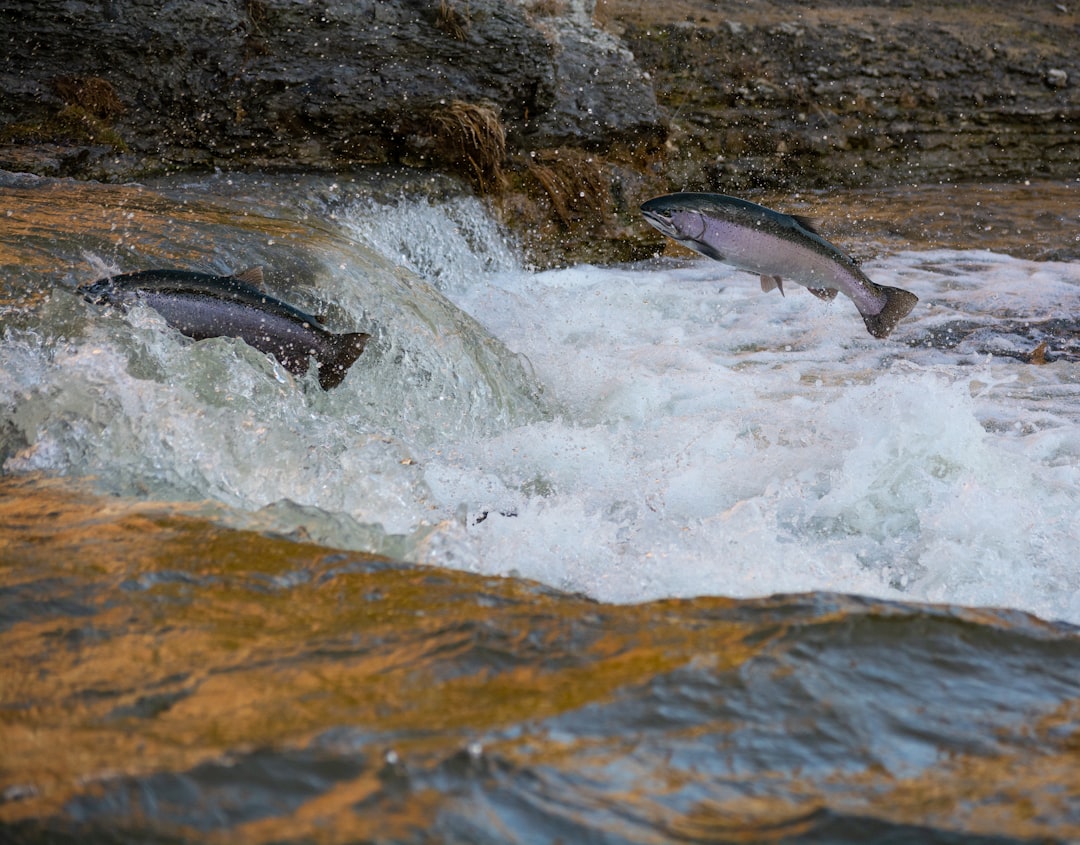
You may be surprised to learn Ireland is already a practitioner of biodiversity offsets, in a limited and obscure way. The Salmon and Sea Trout Rehabilitation, Conservation and Protection Fund gets its revenue from the sale of fishing licences, and provides funding to various projects around the country designed to boost salmon and sea trout populations. The scheme is intuitive: if you’re going to draw from the existing stock through fishing, you should have to help fund measures to help bolster that population.
A panacea? Not yet
How should we assess the efficacy of biodiversity offsetting? One paper on biodiversity offsetting in Germany concludes, somewhat pessimistically, that ‘a substantial proportion of offsets failed to achieve their objectives’. However, to the author’s credit, he also states that despite this, the German regulation ‘is considered to reduce overall rates of biodiversity loss from built developments’.
Biodiversity offsetting is not a panacea. It can be hard to do a fully like-for-like swap of different pieces of habitat – nature isn’t always that fungible. There can also be adverse selection: landowners know more about their plans and their land than outsiders, so maybe they were always planning to do some kind of restoration work and the subsidy didn’t change their behaviour. Sometimes efforts are too small in scale, which is apparently the case for the Salmon and Sea Trout Rehabilitation, Conservation and Protection Fund.
Letters responding to Sam Dumitriu’s argued that we can’t deviate from our protection regime because of the risks. However, the status quo regime isn’t working well, with biodiversity in decline in Europe. We need fresh thinking to arrest this decline. There is a lot of work and experimentation needed to get good, clear answers to questions about offsite mitigation, across many species and habitat types.
If we can develop biodiversity offsetting as a technique, it might help us balance the needs of the natural world with our need for development. But European rules prevent experimentation. Article 6(3) of the Habitats Directive says that the integrity of Natura 2000 sites must be protected, and the judgement in Briels (C-521/12) states that offsite mitigation can’t be taken into account when assessing this. This means that offsite mitigation is banned for Natura 2000 sites in all but the most extreme cases of overriding public interest. Most development is therefore impossible in or near 18 per cent of Europe’s land area, and 10 per cent of its marine area, even if the net outcome is a similar or even better level of biodiversity.
We shouldn’t let the perfect be the enemy of the good. More experimentation and exploration of biodiversity offsetting is key to helping wildlife and habitats, both in Europe and further afield.

Last updated: