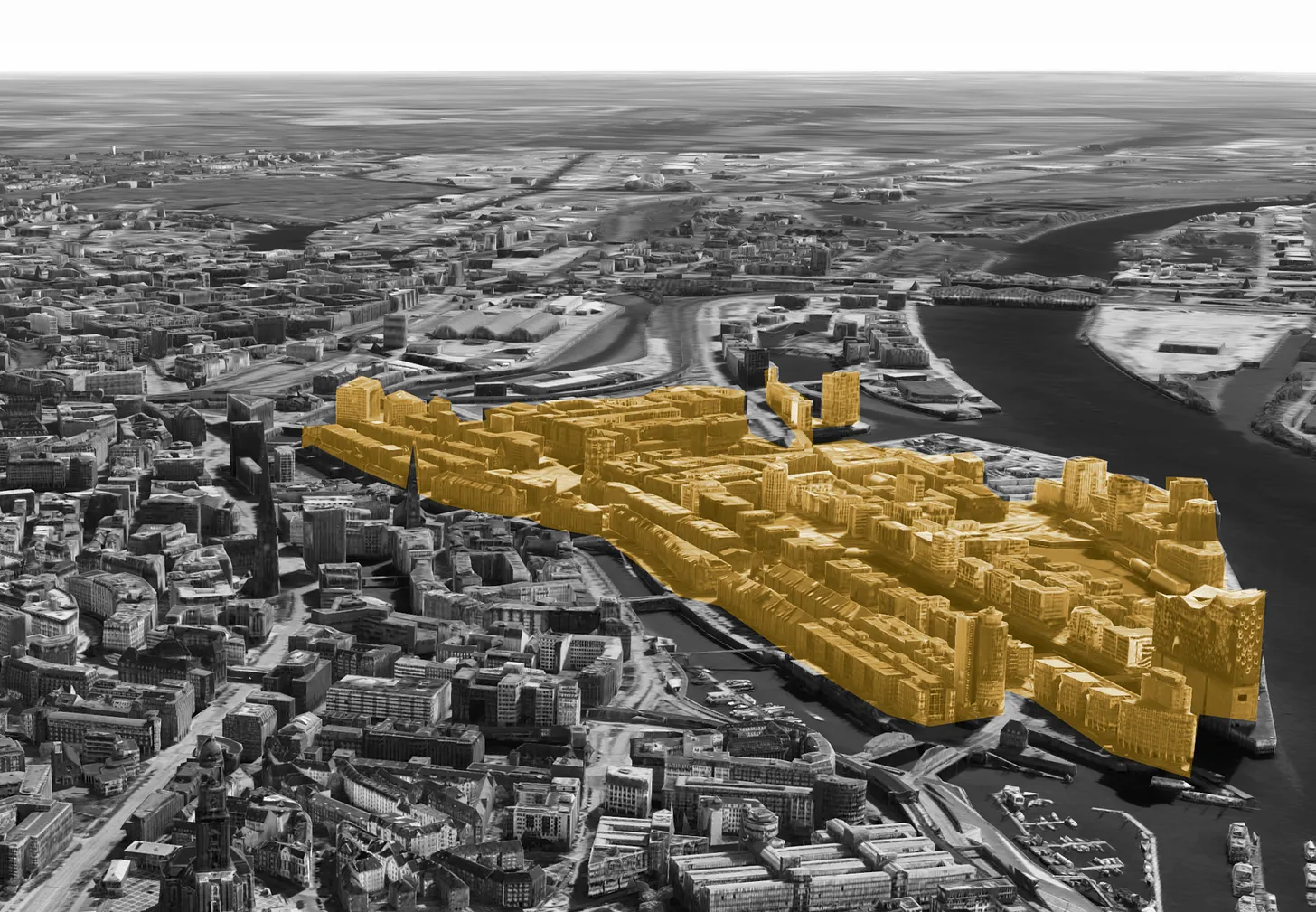
Housing plans are like warehouses: they work better when they’re big.
Some categories of projects just want to be big. Car manufacturers, airports, exams, cable networks, food processors and armies.
Warehouses are big because big ones are cheaper to build, per square metre, than small ones. They have economies of scale. Airports, armies and car companies also have big economies of scale. A ten-man army wouldn’t be much use.
I would like to submit that housing plans are a bit like warehouses. They have economies of scale. By my count, big housing plans have 10 advantages over small ones.
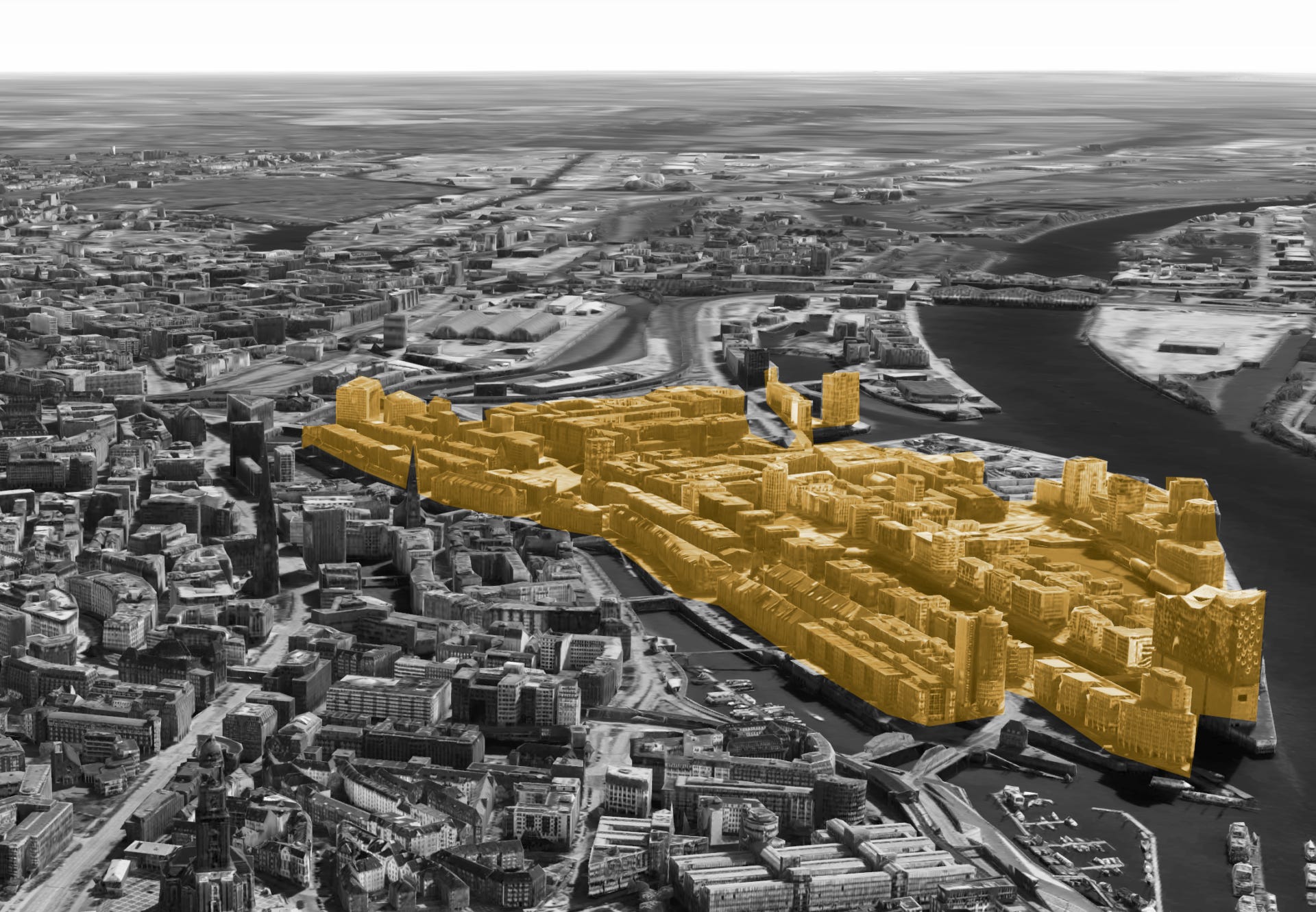
What do I mean by a big housing plan? I mean a single plan with more than, say, 1,000 homes.
10 reasons to make big plans
Big plans are better-looking. It’s a fine thing to live in a nice-looking neighbourhood. The walk to the shops, through leafy streets of handsome stone buildings, lifts one’s spirits.
Good-looking houses are pleasant, not only for their owners, but also for their neighbours. People get a warm glow from living near to other good-looking homes. This is what economists call a positive externality.
But there’s a problem: neighbours don’t pay anything for the warm feeling they get as they walk through their handsome neighbourhood. This results in fewer handsome neighbourhoods than we’d ideally like. Beautiful neighbourhoods are under provided by the market.
This is not just a matter of taste. Ugliness is partly to blame for high housing costs. In a recent study, the legal scholar Christopher Elmensdorf and coauthors found that one of the main reasons people oppose new housing is because they think it’ll be ugly. Ugliness is bad in itself and bad because it results in scarcer, more expensive housing.
What do big housing plans have to do with beauty and the lack of it? Big housing plans incentivise developers to create great neighbourhoods, rather than one off units. Consider the finest neighbourhoods in Ireland: Merrion Square, South William Street, the town of Westport. These fine places were all built by single landowners. These landowners did not seek to maximise the value of each individual site they developed. They sought to maximise the value of the entire neighbourhood.
Big plans encourage developers to think at the scale of neighbourhoods rather than units. Its as true today as it was 300 years ago. The best and most coherent new neighbourhoods in recent Irish history were conceived at scale and led by a single large developer: The Guinness Quarter in the Liberties by Ballymore and Cherrywood by Hines.
Big plans have a nicer public realm. Where is Ireland’s best new public realm? It might be Grand Canal Square in Dublin. That’s a focal point of the South Docklands SDZ. Grand Canal Square was expensive and time consuming to plan and build. But the scale of the docklands development justified the investment. Big schemes justify the time and money that it takes to build nice public realms.
Big plans can have better layouts. There’s an art to laying out rights of way. For efficiency’s sake, it’s better that roads don’t terminate in dead ends. Residential streets should be narrow. Arterial streets should be wide. Pedestrians should move through the space freely. It’s easier to optimise all these rights of way when planners start with a big blank canvas.
Big plans yield more homes per hectare. There are only so many hectares of development land near Ireland’s job centres. If we fill them in piecemeal, one hectare at a time, they’ll be filled at suburban intensity of 50 homes per hectare.
Bigger plans can be built out more densely. From developers’ perspective, big plans are usually integrated with transport, which in turn enables greater density. From the perspective of planners, big masterplans have their own centre of gravity. Planners are more willing to sanction a tall building at the centre of a big coherent scheme than on a random site.
Big plans can win buy in. Winning hearts and minds is critical to the success of any housing plan. Unpopular housing plans are doomed to fail in the long run. A key to winning hearts and minds is early and specific consultation with the public.
European countries build detailed three dimensional models, which live at the town hall and online. The investment in early consultation pays dividends when the output is a clear and specific plan that has public buy-in.
Consulting the public is a patient process. It takes time and effort. Big schemes justify this investment.
Big plans attract more funding. Irish housing is funded in large part by big foreign investors. These investors manage lots of money and need to deploy it in big chunks. Funding small projects isn’t worth their time.
Big plans are more walkable. There are very few walkable neighbourhoods in Ireland. A big chunk of people want to live in them, as evidenced by the premium people are willing to pay for them. They are under-supplied by the market.
Why is this? Walkable neighbourhoods are under-supplied because they require more coordination than normal car-based neighbourhoods. To build a car-based neighbourhood you just need to find a site beside a road, build some houses, and you’re done.
To build a walkable neighbourhood you need to be near a high-capacity public transport link. Even the biggest developers can’t build a new train line.
Big housing plans can integrate housing and transport at scale. The upshot of this is that big new neighbourhoods of 15,000 homes or so can be built comfortably within 800 metres of a train station.
Big plans are more sustainable. This is closely related to the previous point about walkability. Walkable neighbourhoods are much more carbon-efficient than car based ones. This is because a) residents use their cars less and b) their dwellings are better insulated. Research from the UK’s Centre for Cities shows new homes emit 67 per cent more CO2 than new apartments.
Big plans have better services. The dream of many a planner is the 15 minute city: a mixed-use neighbourhood in which citizens’ basic needs are all catered to within a short walk. The 15 minute city is a function of walkability and mixed land use regulations. Another key ingredient is density. Density provides the demand for local services. More warm bodies in a given hectare result in more local services.
Big plans result in density which result in 15 minute cities.
Big plans are an easier sell. 90 per cent of people are not looking for a house right now. But they see the housing system isn’t working well and they want it fixed. Provided they’re specific and credible enough, big plans demonstrate we’re on the right track and chill us all out.
Objection corner
The worst plans ever were big. It is true that some of the worst places ever were the fruits of big ambitious plans. You don’t get disastrous neighbourhoods like St Louis, Missouri’s Pruitt Igoe (built in 1954, demolished in 1972) without a lot of ambition and hubris.
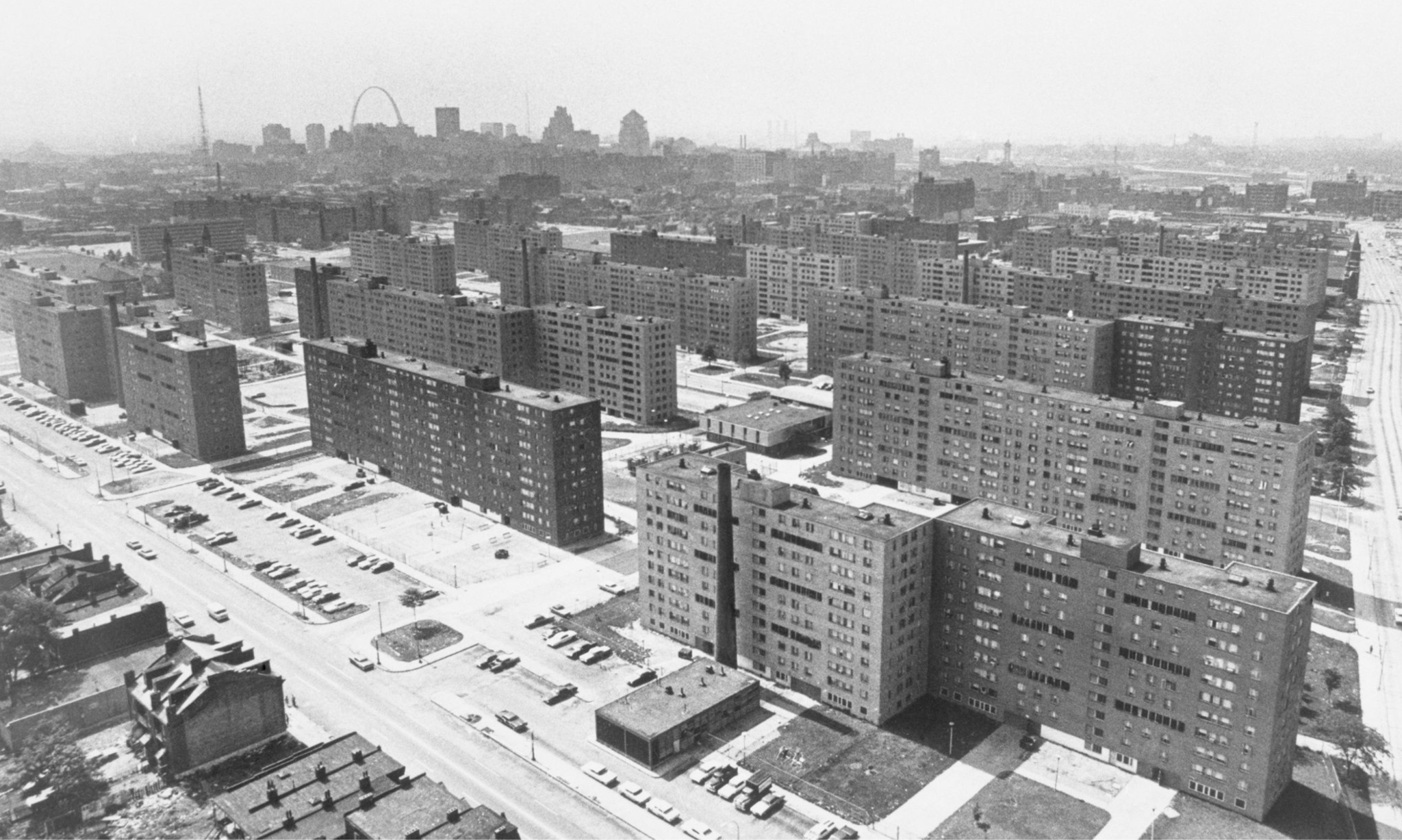
It’s true that the 20th century threw out quite a few grand, ambitious and utopian urban renewal plans. It’s true many of them failed. Others, like Le Corbusier’s plan to demolish central Paris (and later, Moscow) and replace it with motorways and rectangular concrete blocks never got off the ground. But that’s not an argument for giving up on ambition. It’s an argument for not making bad plans. Lots of grand and ambitious urban renewals / extensions have been successful.

We are already too reliant on big builders. It’s true that the Irish system is hostile to small developers. Ireland would have a better system if an army of small developers were building seven units here and there. In healthier housing systems, like in Germany and Japan, small builders play a bigger role.
Having said all that, big housing plans needn’t be hostile to small developers. Big master planned developments can provide a quick, certain judgment on which types of project are allowed to go ahead. Ireland’s UDZs will operate on this basis. This is important to small developers because they struggle to manage planning risk. One adverse planning decision could be enough to wipe a small developer out. Specific masterplans help with this.
Let’s have the courage of our convictions and build plans equal to the 500,000 home deficit we’re facing over the next two decades.
Last updated: