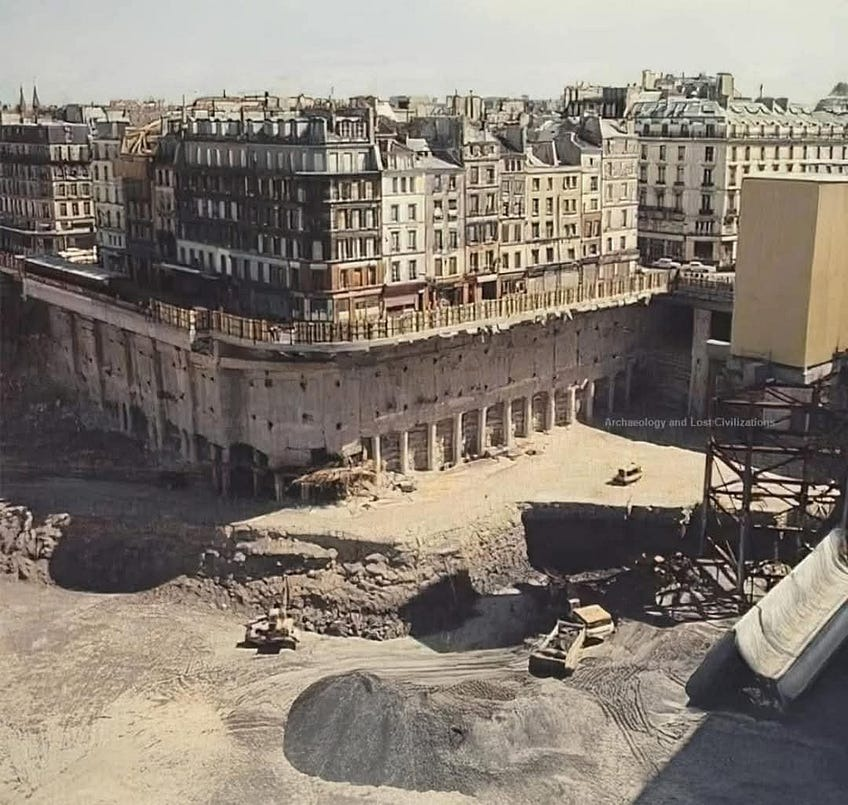
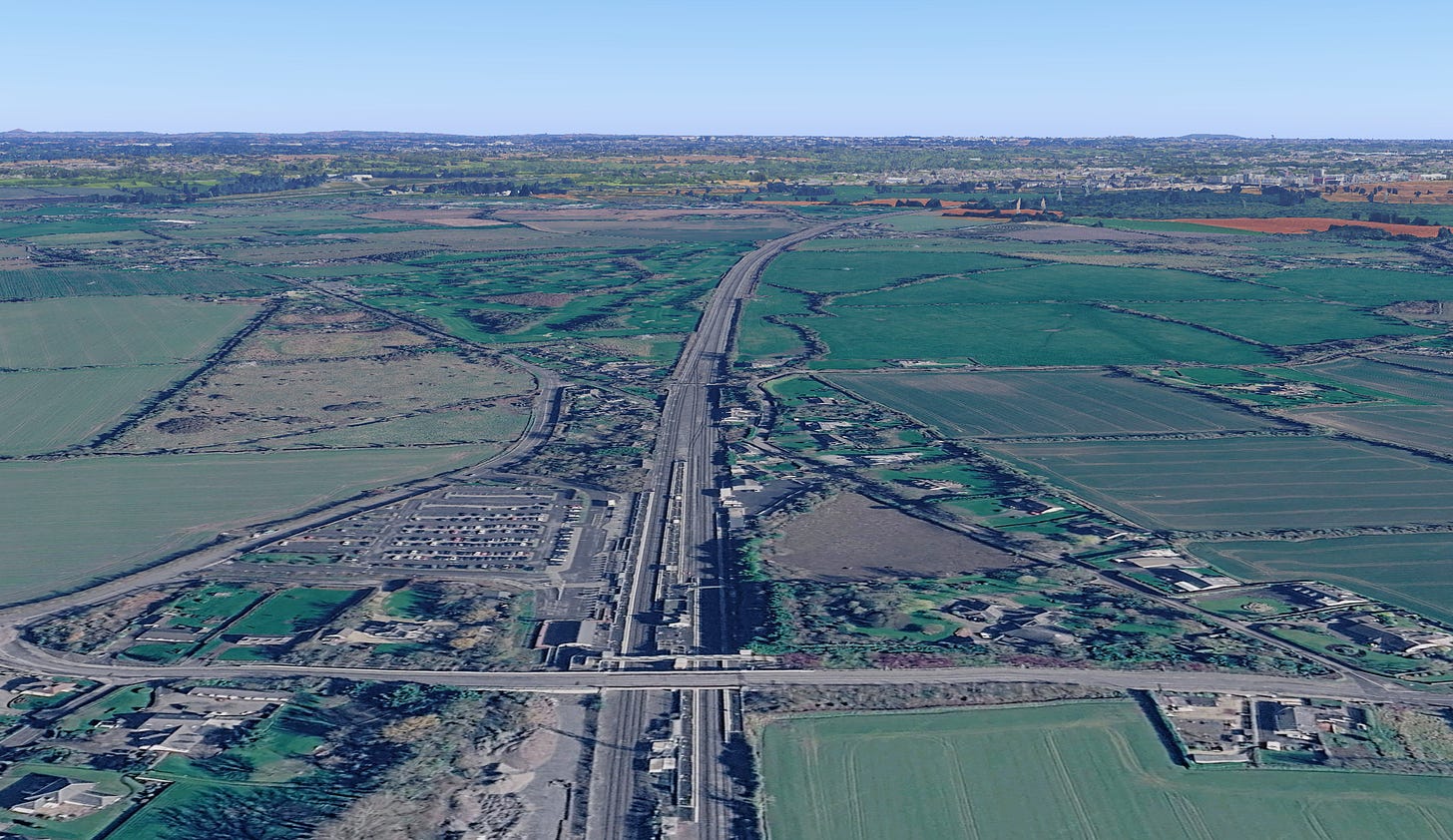
This time last year I took the BART train from Berkeley, California to Berryessa in Silicon Valley. The train was big, modern, and completely empty. Berryessa station had a huge canopy and, again, was empty. Across the street from the station were modest suburban houses.
Berryessa is part of a recent extension to the BART system that cost $2.8 billion in 2026 money. The extension has one of the worst capital costs per rider I have found for any metro line.
BART failed in a different way to my usual metro project targets. My hobby horse is construction costs. The BART extension was costly to build, but nothing too crazy1. Where it failed was in connecting light industrial and light residential neighbourhoods that fundamentally had no need for a heavy rail system. The result is echoing cathedral-like stations in low rise suburbs.
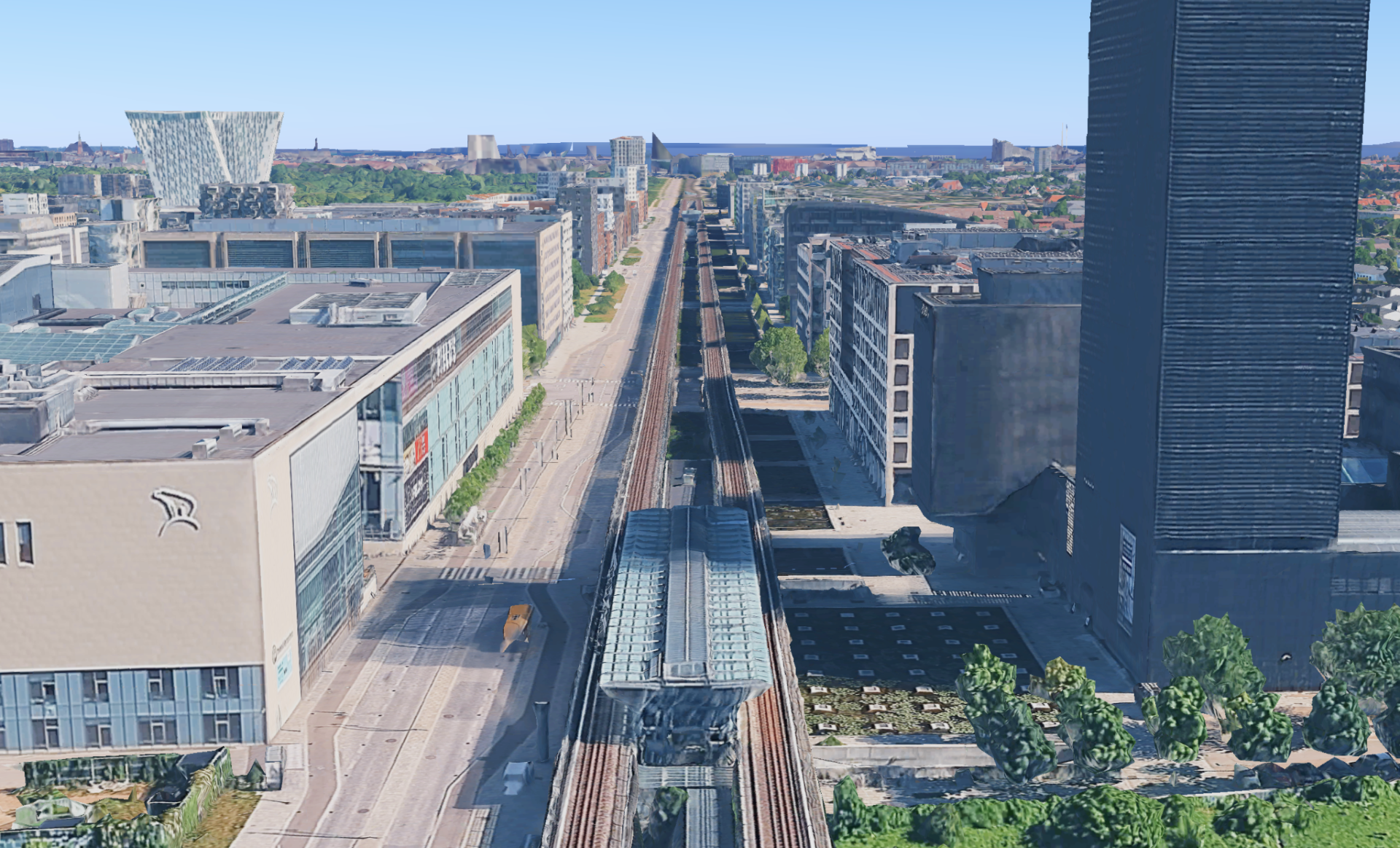
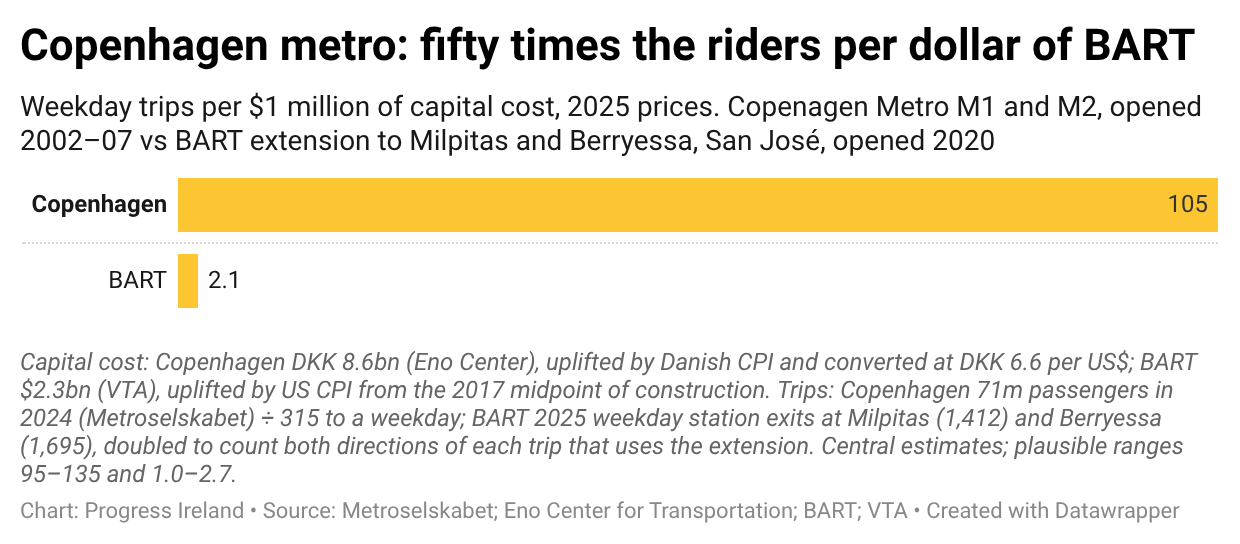
One way to think about this is the capital cost of the project in terms of ridership. Copenhagen’s metro is a reasonable comparator. It wasn’t the cheapest in the world and Copenhagen isn’t the busiest city in the world. But it shows what a well-conceived and well-delivered project looks like.
Copenhagen’s M1 and M2 lines carry about 100 weekday trips for every $1 million spent on their construction (in 2025 dollars.) The BART extension, by contrast, carries 2 trips per million.
How did the Californians end up with such a misconceived project? The answer ties back to the points I made a few weeks ago about Metrolink and the way the Irish state appraises projects.
How the government assesses projects
The Irish government funds tens of billions’ worth of new projects every year. The projects range across every field of human endeavour. The state’s capital is scarce and the citizens’ needs are many. So the state tries to think clearly about projects’ worthiness. It tries to understand whether a euro spent on a new primary care clinic in Dunfanaghy will better serve the Irish people than one spent on a bicycle lane in Knocklyon.
The tool the state uses is cost-benefit analysis (CBA). The state uses CBA to capture the breadth of a project’s benefits, from people’s health to the cleanliness of the environment to time savings. Benefits get quantified in terms of money so they can be compared like-for-like: the money-equivalent of an extra year of good health in Donegal can be compared with the money equivalent of a seven-minute saving on a bicycle commute in Knocklyon.
In assessing transport projects, government economists compare a world with and without the project. They model how people would move around in that world as specifically as possible. Then they compile benefits such as time saved, congestion relieved, accidents avoided and pollution reduced. The monetary value of the benefits, stretching out decades into the future, is compared to the project’s monetary and other costs.
The standard assessment doesn’t consider land values because it separately credits the other benefits of the project such as time savings and environmental benefits. Those same benefits are independently incorporated into house prices: people pay more for a short commute and clean air. To include land values in the CBA would be to double-count benefits such as shorter journey times and cleaner air. More on this later.
How does the standard assessment treat housing? In the standard comparison, the projected number and location of homes and jobs are assumed to be identical with and without the project. This isolates the benefits of providing better transport for a given future population (including population growth) and pattern of development. It avoids crediting the project with additional development that might never happen, or might have happened anyway.
Problem one with rail CBAs
What I just described is a standard tool that’s used to compare all sorts of government projects on a like-for-like basis.
The problem is that the tool doesn’t work well for very big projects, particularly transport projects. A core of standard CBAs is that they compare two world states in which the only thing different is the addition of the project. It’s on that basis that the CBA compares costs and benefits.
Now imagine a CBA for Metrolink, running through the middle of Dublin. The metro will have the capacity to move 40,000 people per hour, which is the equivalent of a 28 lane road. Under the standard CBA methodology, Dublin with and without Metrolink will be compared. So the metro is assessed based on transport savings, congestion savings etc for the same forecast population, living in the same places, with or without the line.
What it ignores is the capacity of the new system. It counts the time savings for those who would travel along its route anyway, and not the benefits to the tens of thousands of extra people who will move near to the metro to take advantage of the newly available 20 minute commutes into the centre of the city.
The Metrolink from Swords is, in a way, like reclaiming land at Sandymount Strand. In both cases you’re spending money up front to create new capacity to live within a 30 minute commute of jobs in central Dublin.
Problem two with rail CBAs
A defender of CBAs might push back: “You can’t count additional housing in tall buildings near the station in Swords as a benefit that accrues to the project. Those people would have lived somewhere.”
The answer to this objection is that in Ireland, housing is rationed by the planning system. It’s not the case that you can build homes or apartments wherever people would like to buy them. Irish housing, on average, costs about twice the cost of the (depreciated) physical structure. The remainder is mainly the scarcity generated by the planning system.
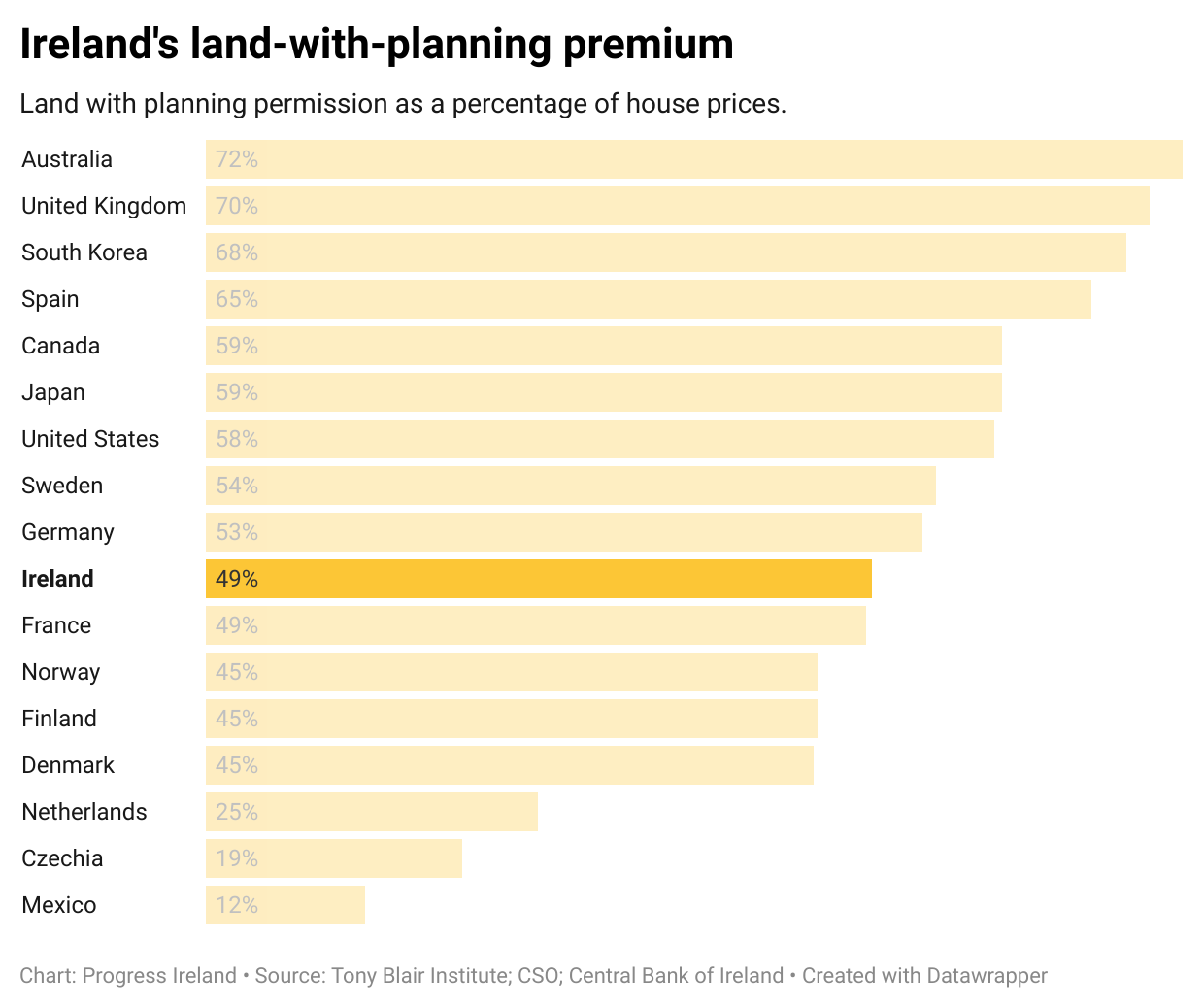
All of which is to say that there is genuine value created when the planning system changes the zoning around Swords town centre as a response to the construction of a metro line.
So the mechanism is: high capacity transport project is built –> local authority zones more housing near stations –> new value created by the issuing of planning permissions. The value created is the zoning changes that wouldn’t have happened otherwise. The project induces planners to ration a little less tightly than before.
Can’t we just zone more land without multibillion transport projects? In Ireland density is permitted only where transport capacity exists. Apartment guidelines, core strategies and An Coimisiún Pleanála refuse housing on transport grounds. The council cannot zone Swords for tall buildings without the line.
To be sure
To be sure, the Irish government is not ignorant of this debate. A recent paper by Joseph O’Connor, a Department of Transport economist, said: “many of the projects which do lead to significant land use changes will be large and capital-intensive projects, such as new rail lines serving greenfield sites, or brownfield sites undergoing rezoning. Understanding these changes where possible and appropriate should lead to a better-informed appraisal process and decision-making.”
Accurately accounting for the value created by changes in land use is not simple. Land Use Transport Interaction (LUTI) models exist, but they are complex. In a LUTI the map is an output. The model works in a loop: The model gives each zone an accessibility score; households and firms choose zones; better access and lower rent attract more people; demand for floorspace in each zone rises or falls along with rents; developers build where rent beats the cost of building; the new map changes trips. The loop keeps running until the numbers settle.
A cruder method is to count the added floorspace in the with-train scenario, net of cost and displacement, and then recompute trips. The UK does this. They call it dependent development. Joseph O’Connor said of these “the UK’s focus on dependent development may provide a useful methodology to estimate LVU within certain contexts.”
Copenhagen and California
The California story is interesting because it can be read as both supporting and opposing my argument that rail projects ought to be assessed inclusive of land use changes.
It’s a textbook white elephant. It was never even subjected to a CBA. Had it been CBA’d by Irish civil servants, they would’ve noticed the suburban homes surrounding Berryessa station, and modelled a small number of journeys on the route, and they would have recommended the state’s capital be deployed elsewhere.

Irish CBA methodology assumes the world is like California: where big projects don’t change the city. But Copenhagen shows it doesn’t have to be like that. Copenhagen didn’t just incorporate land value into a CBA. To help fund the project, it developed publicly-owned land near the new metro route.

In Dublin we don’t build transport ahead of housing, and we end up with gridlock and a housing shortage. In California they don’t zone housing alongside transport, and they end up wasting money on white elephants. One sin of omission and one of commission.
Copenhagen shows how a medium-sized city can get it right, by simultaneously supplying both transport and zoned land — the two tightest constraints that deprive us of housing.
1 $147 million per kilometre, moderately expensive for a non-tunnelled project.
Last updated: